

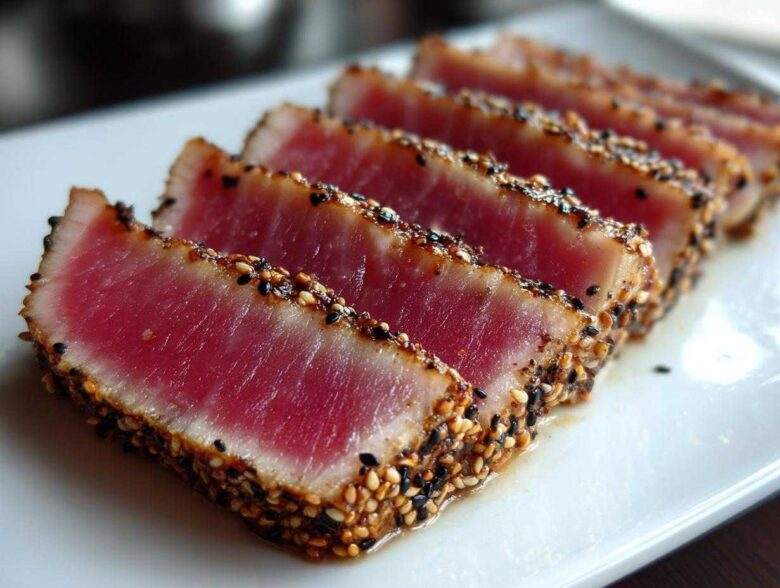
Listen, sometimes you don’t have time for a three-hour simmer, but you still desperately want that gorgeous, gourmet tuna experience you usually only get at fancy restaurants. We get it! Sofia and I live for those quick wins in the kitchen that feel seriously impressive. That’s why this recipe for Seared Ahi Tuna is one of our all-time favorites. It takes top-quality sushi grade tuna and turns it into something spectacular in minutes. Forget the mess of the sad pasta night; this dish is pure, clean, impressive flavor that proves you don’t need to be a pro chef to nail that perfect sear. If you’re looking for the ultimate guide to a fast, flavorful healthy dinner, you found it. Check out our story if you need a good laugh about our early cooking mishaps!
Why You Will Master This Seared Ahi Tuna Recipe
Honestly, cooking this tuna feels like cheating—it’s that fast, and the results look like you spent hours plating something worthy of a magazine cover. Trust me when I say you don’t need to be a culinary genius to nail this. We built this recipe around speed and simplicity, so you get that restaurant quality without the fuss.
Speed: A Quick Seafood Recipe Ready in Under 20 Minutes
- You only need about 3 minutes of actual cooking time! The total time on the clock is under 18 minutes, making it the perfect quick seafood recipe for a busy weeknight when you still want something gourmet.
Flavor Profile: Authentic Asian Tuna Recipe
- We aren’t messing around with complicated spice rubs here. The marinade uses just a few powerhouse ingredients—soy sauce, ginger, and garlic—to create a fantastic Asian tuna recipe that perfectly complements the richness of the fish.
Essential Ingredients for Perfect Seared Ahi Tuna
Okay, before we even think about turning on the stove, we need to talk about the star of the show: the fish itself. With searing this fast, the quality of your yellowfin tuna is absolutely everything. We need those beautiful, thick cuts that are ready to be crusted and flipped in seconds. If you get the fish wrong, the whole thing falls apart, so pay attention here!
Selecting the Best Yellowfin Tuna Steaks
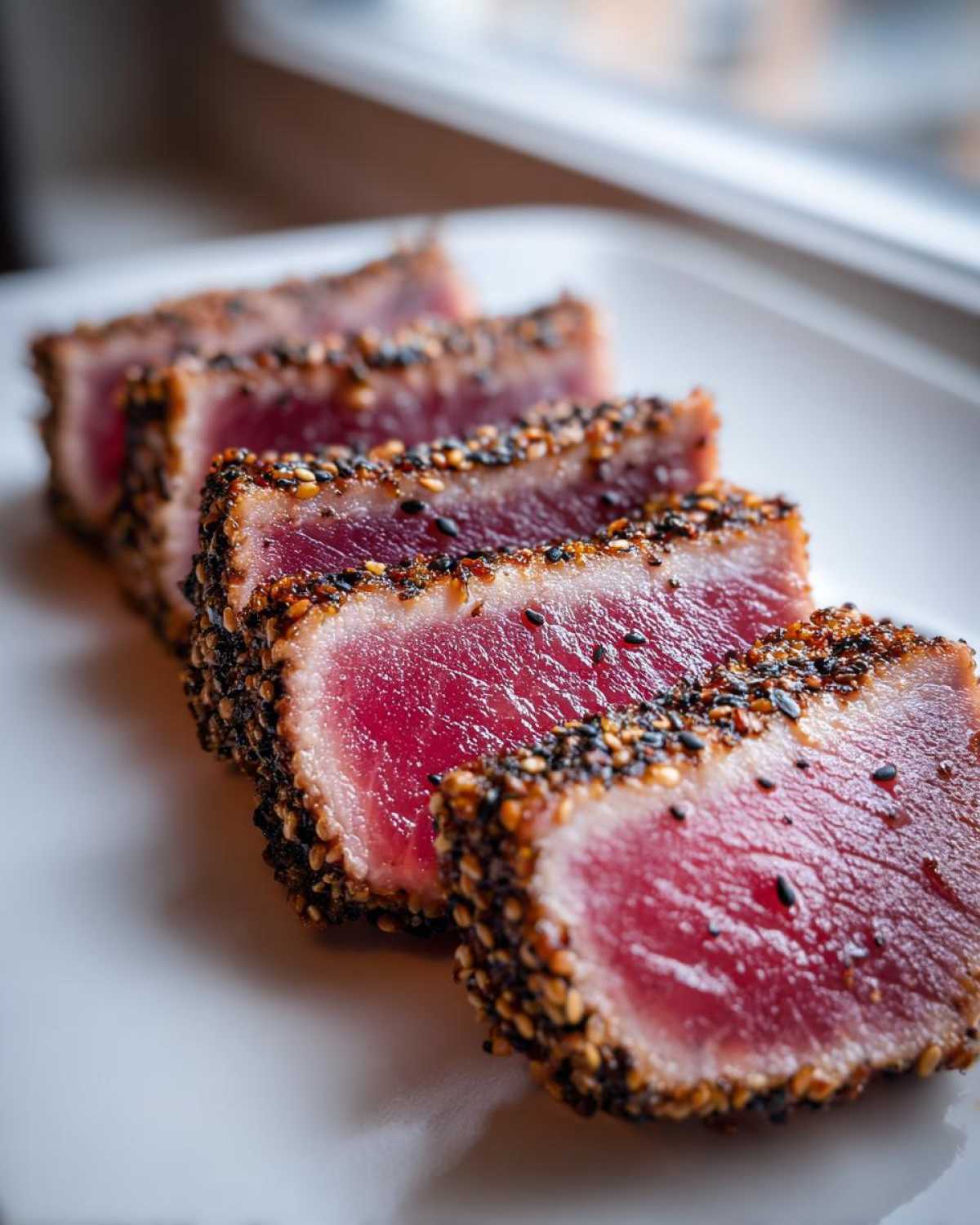
Look, this is where my advice comes in: You simply cannot skimp on quality here. We are looking for sushi grade tuna—that means it has been handled and frozen according to strict guidelines, which is important for food safety, especially when you are eating it nearly raw. When I buy tuna for this recipe, I always ask the fishmonger specifically what the handling process was. A good, deep red color without any brown patches is what you want to see. If the Seared Ahi Tuna looks pale or smells ‘fishy,’ leave it right there! This recipe moves too fast to hide poor ingredients.
Equipment Needed for Your Seared Ahi Tuna
This isn’t a recipe that requires a million fancy gadgets, which is part of why I love it, especially when I’m helping Sofia clean up after a big cooking session! But you do need the right tool for the job when it comes to getting that intense, crispy sear on the outside of your Seared Ahi Tuna without turning the inside gray. Using the wrong pan is a rookie mistake that will leave you with lukewarm, sad tuna.
So, here are the absolute must-haves from our chaotic kitchen that make this work every time:
- A Super Heavy-Bottomed Skillet or Cast Iron Pan: This is non-negotiable. You need something that holds heat like crazy and distributes it evenly. My trusty cast iron skillet gets screaming hot, which is exactly what we need for that 90-second sear. Don’t even try this with a thin aluminum pan; you’ll just steam the fish instead of searing it.
- Tongs: Forget spatulas for flipping! You need sturdy tongs to grab those beautiful, sesame-crusted steaks and flip them quickly and confidently without tearing the crust off.
- A Very Sharp Knife: Since we slice this thin against the grain, a sharp knife makes everything look professional. If your knife is dull, you’ll just mash up the beautiful sear you worked so hard to create.
That’s it! No immersion circulators, no fancy thermometers needed for this quick seafood recipe. Just focus on getting that skillet properly heated up!
Step-by-Step Instructions for Seared Ahi Tuna
This isn’t where we get fancy or complicated; this is where we move fast! Remember how I said timing is everything? Well, that applies doubly here. We are making a super simple coating and marinade, but you can’t let the fish sit around and get mushy. When it comes to beautiful, quality yellowfin tuna, the goal is a warm, barely cooked center and a crust that just snaps when you bite into it. If you mess up the timing, you end up with steamed fish, and trust me, nobody wants that. I always put on some high-energy music, maybe something like the playlist we use for our stir-fries, because you need to keep the pace up!
Preparing the Quick Marinade and Coating the Tuna
First things first, we make our flavor base. In a small bowl—keep your cleanup minimal!—whisk together the sesame oil, soy sauce, fresh ginger, and that minced garlic. Now, pour this over your sushi grade tuna steaks. Turn them over gently to coat every spot. Crucial timing alert: Let them hang out in that marinade for exactly 10 minutes. No more! After 10 minutes, fish fat starts to absorb too much liquid and the texture changes. When the timer dings, pat them dry slightly and get ready for the seeds. Spread your mixed black and white sesame seeds out on a plate—be generous! Press those marinated steaks firmly, coating both sides completely. You want a thick, almost shaggy layer of sesame seeds clinging on. That’s your blast shield against the heat!
Achieving the Perfect Sear on Your Tuna Steaks
This is the dramatic part! You need your heavy skillet, preferably cast iron, and you need it HOT. I mean bring it up to high heat until you see wisps of smoke. We want the pan almost screaming. Don’t add any oil to the pan yet—the sesame seeds and the marinade we added earlier are enough, and adding extra oil will just lower the smoke point and burn the seeds before the tuna cooks. Carefully lay your sesame-crusted steaks onto that blazing hot surface. Now, the clock starts ticking real fast. For that perfect rare center, you’re looking at 60 to 90 seconds per side. Ninety seconds max! Flip gently with your tongs, get the other side, and that’s it. Do not press down on the tuna; you’ll squeeze out all the precious juices!
Resting and Slicing the Seared Ahi Tuna
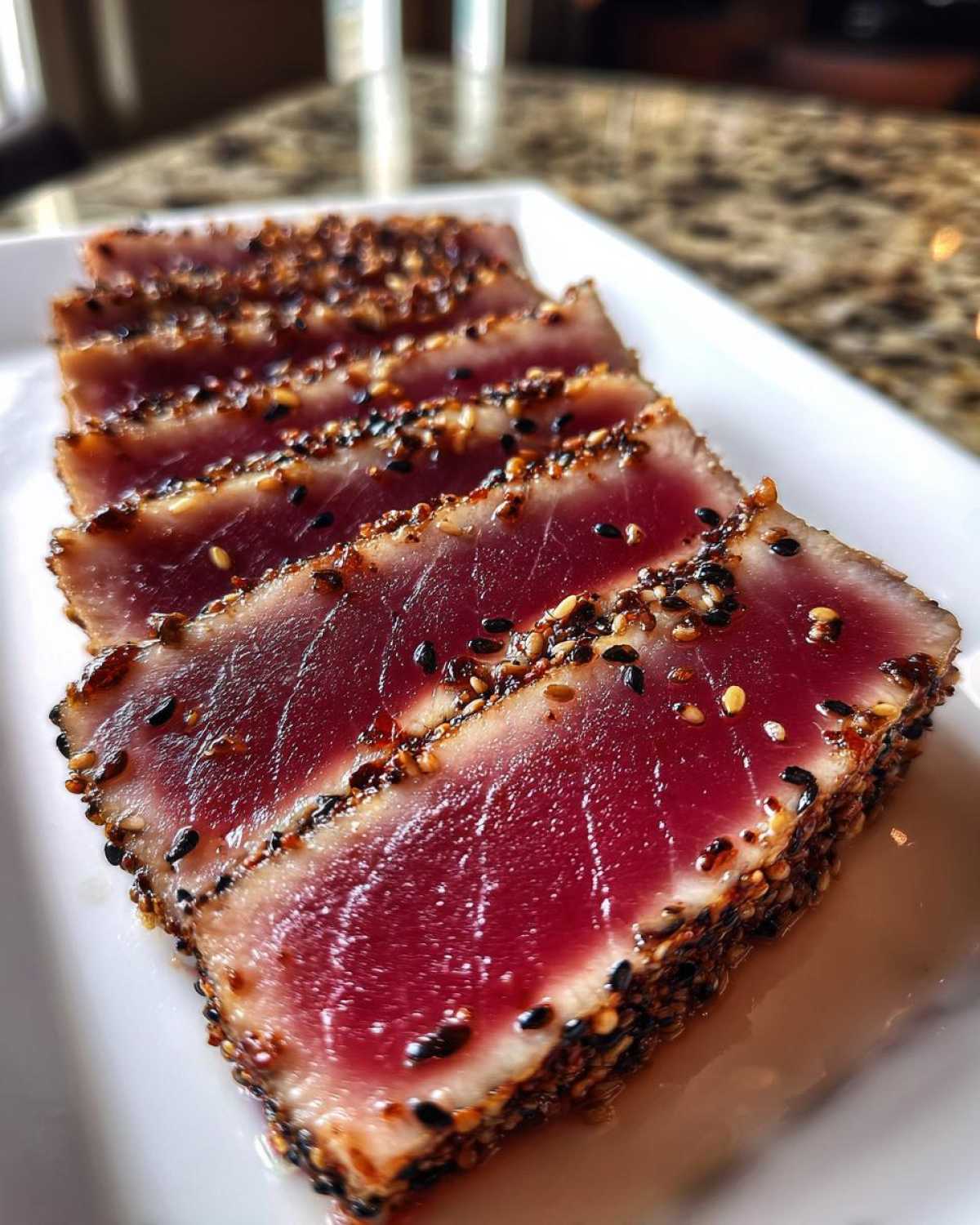
When you pull those beautiful pieces of Seared Ahi Tuna out of that skillet, they’ll look incredible—dark crust, totally pink inside. But don’t slice them immediately! If you cut them right away, all that built-up heat and juice rushes right out onto your cutting board. Just let them rest on the board for a full 5 minutes. Seriously, go wash your little marinade bowl. After resting, take your sharpest knife and slice the steaks thinly, against the grain. Slicing against the grain is what keeps the texture tender. If you slice with the grain, those beautiful steaks turn into chewy little ribbons, and we absolutely can’t have that flavor disappointment!
Tips for Success Making Gourmet Tuna
Okay, we’ve covered the method, but let’s talk about the little things that separate a *good* sear from the absolute best Seared Ahi Tuna you’ve ever made. Sometimes, even when you follow the steps perfectly, you run into little snags. That’s when you need a little bit of kitchen intuition—the kind Sofia always talks about when she throws caution to the wind!
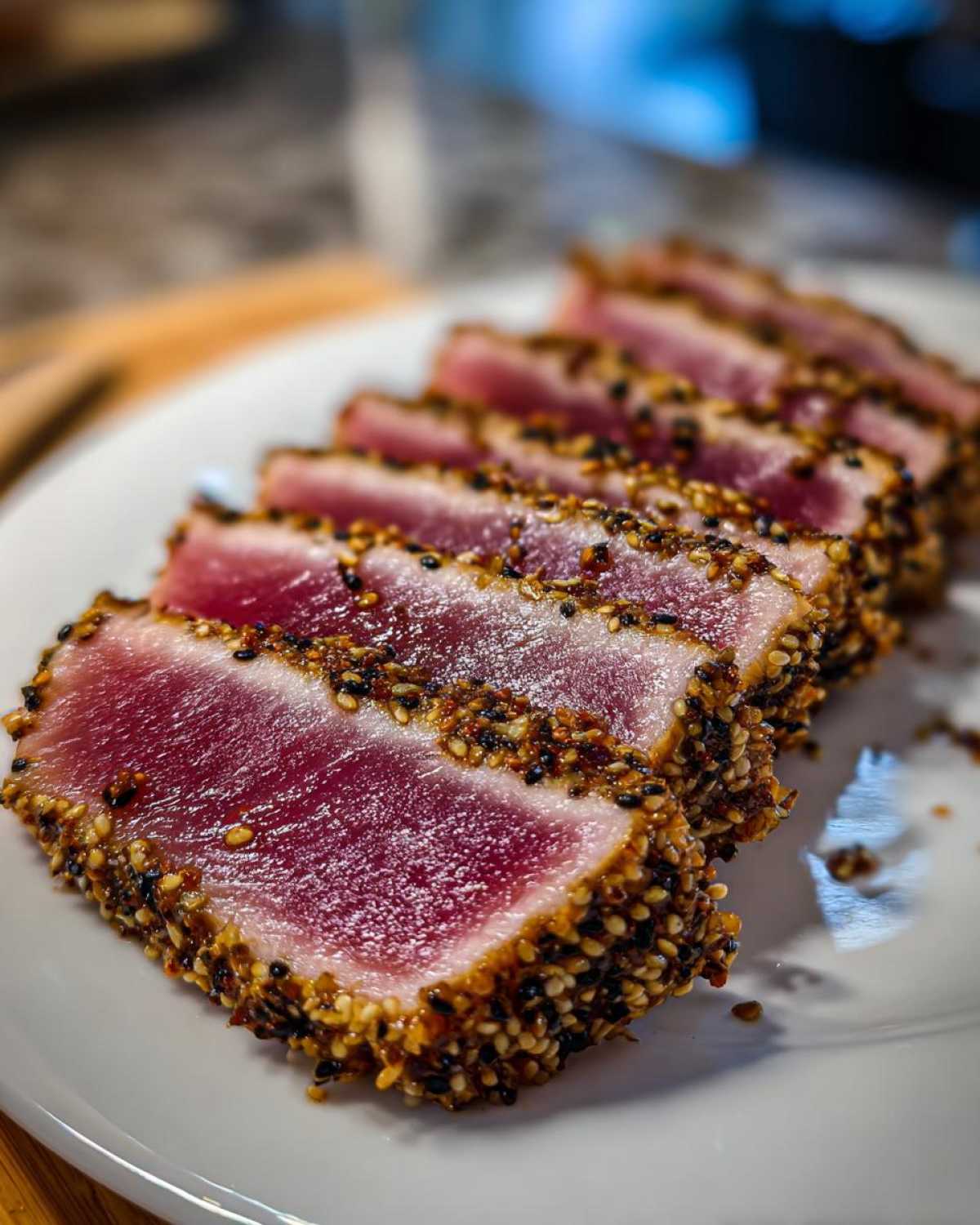
First, remember that crust we built with all those sesame seeds? That crust is delicate! If you hear sizzling when the tuna hits the pan, that’s good. If you hear crazy spitting and sputtering, your pan might be too hot, or maybe you didn’t pat the marinade off enough. We want fierce heat, but we want it controlled. If you are worried about burning the seeds before the fish cooks, take it down a tiny notch from ‘smoking’ to ‘very hot.’ It’s a fine balance, but you’ll get the hang of it quickly. Trust yourself; you’ve got this!
Also, let’s talk about the sauce booster. If you’re serving this with a simple soy dip, try this little trick Sofia swears by for elevating the whole gourmet tuna experience: mix one teaspoon of rice vinegar right into your dipping sauce. Rice vinegar adds a brightness, an almost electric tang that cuts through the richness of that good yellowfin tuna perfectly. It makes the whole Asian tuna recipe sing, honestly.
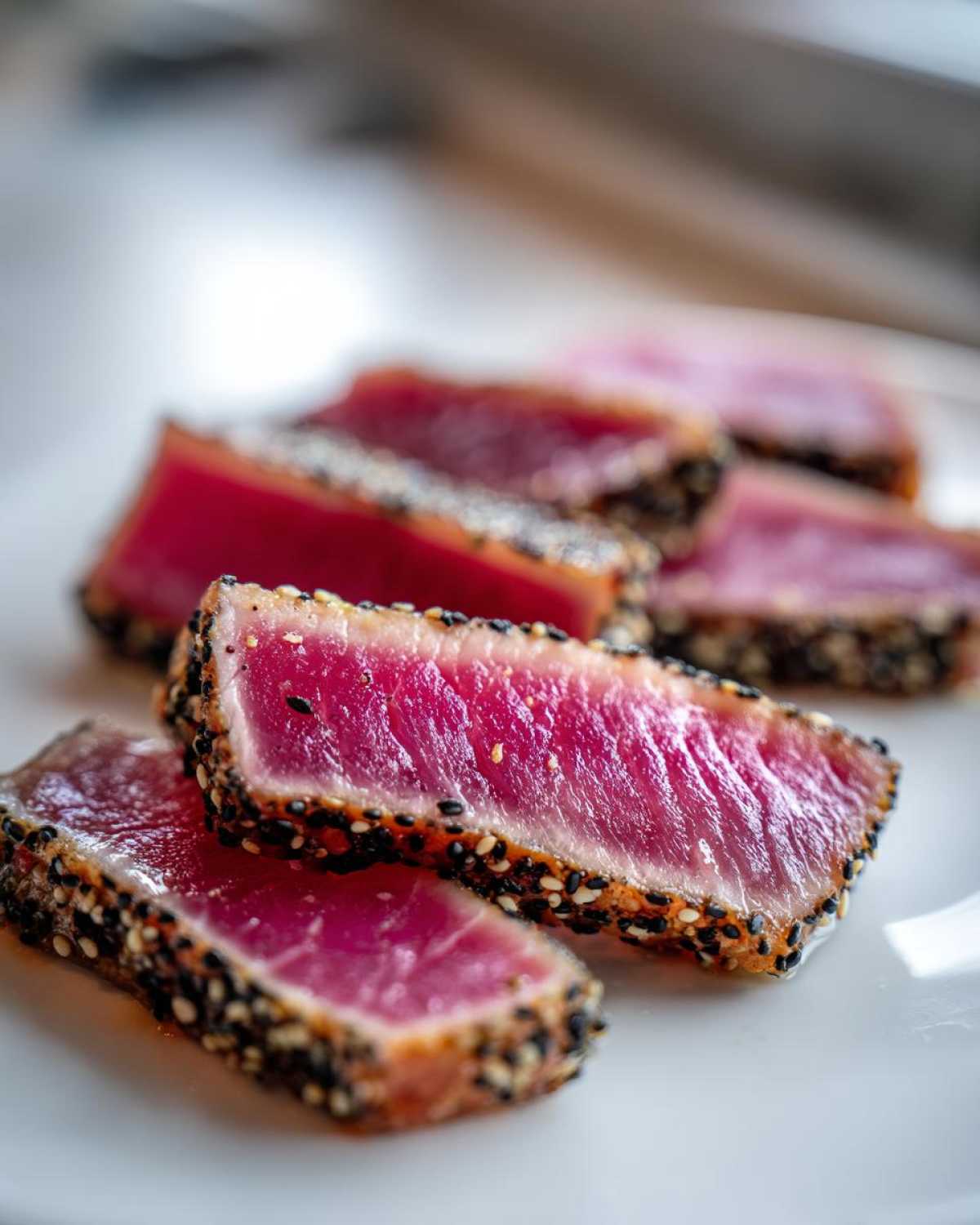
And please, step away from the pan when you think it’s done! I know it’s tempting to poke it or peek, but remember, this cooks in under two minutes per side. Overcooking this fish is the ultimate culinary tragedy. If you’re serving this as a fun, healthy dinner, the center *should* still look nearly raw. If you cooked it for three minutes per side, you’ve moved into the land of cooked-through fish, which is great for a different recipe, but not today! Pop over and read some of our general kitchen musings on the Cookify Me blog if you want more quick tips on flavor building!
Serving Suggestions for Your Asian Tuna Recipe
So, you nailed the sear! Congrats! Now comes the fun part—plating this gorgeous, fast **Seared Ahi Tuna** so it looks as good as it tastes. Since this dish is naturally light, quick, and packed with clean protein, it pairs perfectly when you want a super satisfying, yet light, meal.
My favorite way to serve this as a complete **healthy dinner** is to keep some of the Asian flavors going on the side. Don’t overthink it; this dish shines when the sides are simple and fresh.
The Perfect Bed of Rice
Steamed white rice is a classic and works like a dream for soaking up any lingering marinade drips. But if you’re feeling ambitious (and only slightly later in the day than when you started this recipe!), try making a quick spicy mayo to drizzle over the top before you add the tuna. Seriously, a little Sriracha mixed into Kewpie mayo is life-changing.
For something even more exciting that incorporates seafood and rice but keeps that quick vibe, you’ve got to check out our Quick Spicy Tuna Rice Bowl Recipe. It uses the same quality fish but amps up the flavor profile!
Freshness on the Side: Veggies and Greens
You need something green nearby to balance all that rich flavor. We almost always have sliced avocado on the plate—the creamy, cool texture is the absolute counterpoint to that hot, spicy crust. It’s a gorgeous pairing.
If you want to give the meal a little more structure, try lightly steaming some asparagus or blanching some edamame. Toss those lightly with a dash of sesame oil and a sprinkle of sea salt. Don’t overcook the veggies; we want them crisp-tender! This keeps the whole plate feeling vibrant and light, exactly what you want from a fantastic seafood dinner.
Storage and Reheating Instructions for Seared Ahi Tuna
Okay, I’m going to be completely honest with you, just like I am with Sofia when I burn the toast: This Seared Ahi Tuna is an instant gratification dish. It shines when it goes straight from the cutting board to your mouth while the center is still that perfect, barely warm rare. Because we are using such high-quality sushi grade tuna, once it cools down and the temperature evens out, it loses that incredible textural contrast between the warm crust and the cool center.
So, the reheat button? Don’t even look at it. If you try to warm up leftover seared tuna, you are just asking for dry, grayish fish, and we put too much effort into getting that perfect crust just to steam it afterwards!
However, sometimes you genuinely cook too much (it happens to the best of us!), and you need to store leftovers. Here is how we handle it:
- Cool Down Fast: Seal the cooked slices in a very airtight container and get them into the coldest part of your fridge as soon as they’ve cooled to room temperature. Don’t leave them sitting out for hours! We want to stop any further cooking immediately.
- Eat Cold, No Reheating: When you pull those leftovers out the next day, they are best served cold—think of them almost like a chilled, thick slice of sashimi, maybe sliced even thinner than you cut them the first night. They are still totally tasty used in a salad, diced up over greens, or mixed into a cold noodle dish.
- Keep it Brief: If you absolutely must warm them slightly—and I mean *slightly*—you can give the slices a *very* brief, gentle toss in a non-stick pan for maybe 15 seconds per side, just to take the chill off. But honestly, I rarely bother. Cold yellowfin tuna is still better than overcooked tuna!
Frequently Asked Questions About Seared Ahi Tuna
I know you might have a million little questions buzzing around, especially since handling raw-ish fish can seem intimidating at first! That’s totally normal. We’ve been there, bouncing recipe ideas off each other at 11 PM. Don’t hesitate to reach out if you need more help—you can always contact us right here!
Can I use frozen tuna for this quick seafood recipe?
While we all love a good bargain, fresh is always king for getting that perfect sear. If you happen to buy frozen steaks, you have to thaw them properly—never microwave them! The best way is transferring them from the freezer to the fridge overnight. Make sure they are completely thawed and *very* dry before you start marinating. Any extra surface moisture will steam the tuna instead of sealing in that beautiful crust we worked to create for this quick seafood recipe.
What is the safest way to ensure my yellowfin tuna is cooked correctly?
Safety boils down to sourcing, which we talked about being vital for that yellowfin tuna. To check doneness, you are checking for layers! The outside layer must look opaque and nicely browned from the sear. When you slice it, the center should still look deep red and translucent—that’s your rare center. Never cook it all the way through; that texture is lost immediately.
Can I substitute the soy sauce in the Asian tuna recipe?
Absolutely! We never want rigid rules in the kitchen. If you need to avoid gluten, tamari is an easy 1:1 swap for the soy sauce in our Asian tuna recipe. If you’re watching sodium or want a slightly different, sweeter flavor profile, try coconut aminos instead. It gives the marinade a little more depth, and it still works perfectly with the ginger and garlic!
Sharing Your Perfect Seared Ahi Tuna Creation
Alright, cooking friends, this is where the fun part really begins! You’ve conquered the high heat, dealt with the quick marinade, and hopefully, you’re now staring at a plate of shockingly beautiful, perfectly crusted Seared Ahi Tuna. Please, please tell me you’re slicing it up and looking at that incredible rare center. If you managed to nail that sear without too much smoke, you deserve a medal!
Leo and I live for seeing what you all create in your kitchens! We love knowing that you’re getting that quick, impressive meal onto the table. Whether it turned out absolutely picture-perfect or maybe you realized you needed a second round because the first one disappeared too fast, we want to hear about it.
Snap a photo of your final plate! Did you serve it with that avocado we recommended, or did you go totally rogue with an awesome side? Tag us on social media so we can gawk at your fantastic results. Seriously, seeing your successes is the fuel that keeps us burning the midnight oil here at Cookify Me.
Have thoughts on the recipe, or maybe you substituted ginger for turmeric and it was amazing? We love hearing your chaotic genius moments! Drop a comment below, or better yet, send us a message. We read every single one, even if we forget to update our privacy policy as often as we should!
Now go enjoy that amazing, restaurant-quality seafood! You earned it.
PrintPerfectly Seared Ahi Tuna Steaks
Learn how to get a beautiful crust on sushi grade yellowfin tuna with this quick and easy Asian-inspired recipe.
- Prep Time: 15 min
- Cook Time: 3 min
- Total Time: 18 min
- Yield: 2 servings
- Category: Dinner
- Method: Pan Searing
- Cuisine: Asian
- Diet: Low Fat
Ingredients
- 2 (6 ounce) sushi grade ahi tuna steaks
- 2 tablespoons sesame oil
- 1 tablespoon soy sauce or tamari
- 1 teaspoon grated fresh ginger
- 1 clove garlic, minced
- 1/2 teaspoon black pepper
- 1/4 cup sesame seeds (mixed black and white)
Instructions
- In a small bowl, whisk together the sesame oil, soy sauce, ginger, and minced garlic. This is your quick marinade.
- Place the tuna steaks in a shallow dish and pour the marinade over them. Turn the steaks to coat both sides evenly. Let them marinate for 10 minutes; do not marinate longer as the acid can start to cook the fish.
- Spread the sesame seeds out on a plate. Press each side of the marinated tuna steaks firmly into the seeds until they are completely coated.
- Heat a heavy-bottomed skillet, like cast iron, over high heat until it is very hot. You want the pan almost smoking.
- Carefully place the sesame-crusted tuna steaks into the hot, dry skillet. Sear for 60 to 90 seconds per side for rare to medium-rare (sushi grade tuna cooks very fast).
- Remove the tuna from the pan immediately. Let the steaks rest on a cutting board for 5 minutes before slicing against the grain into half-inch thick pieces.
Notes
- For an extra flavor boost, mix 1 teaspoon of rice vinegar into your dipping sauce.
- If you like your tuna cooked slightly more, add 15 seconds to each side, but remember that overcooking ruins the texture of quality ahi.
- Serve this gourmet tuna with a side of steamed rice and sliced avocado for a complete healthy dinner.
Nutrition
- Serving Size: 1 steak
- Calories: 280
- Sugar: 1
- Sodium: 350
- Fat: 15
- Saturated Fat: 2
- Unsaturated Fat: 13
- Trans Fat: 0
- Carbohydrates: 4
- Fiber: 1
- Protein: 32
- Cholesterol: 75