

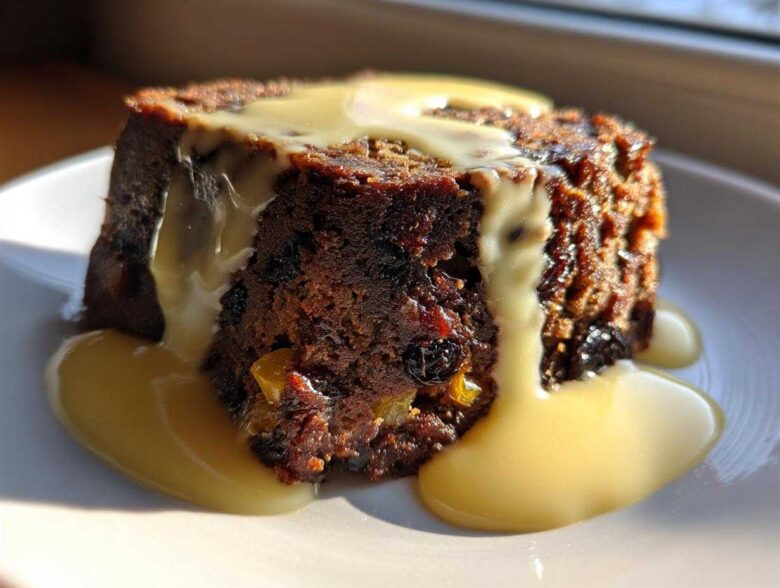
Oh my goodness, if you’re looking for that centerpiece dessert that just screams tradition and warmth, you’ve landed in the right place! Forget those quick microwave recipes; we’re going old school today. I’m sharing the recipe my aunt swore by for every single milestone—the rich, heavily spiced, absolutely essential Traditional English Plum Pudding with Brandy Butter Sauce.
This isn’t just a dessert; it’s history steaming in a basin! Making a proper plum pudding takes a little patience, I won’t lie, but the results are magnificent. The intense fruit flavor, the deep molasses notes, and that luxurious brandy sauce make every minute of waiting worthwhile. Trust me on this one; once you steam one of these beauties, you’ll never look back. It’s the classic holiday confection everyone dreams about!
Why This Traditional Plum Pudding Recipe Works (Easy Plum Pudding Recipe)
I know the thought of steaming something for six hours sounds scary, but honestly, this is where the magic happens! This recipe keeps things straightforward so you can achieve that deep, authentic plum pudding flavor without the fussy steps. You basically mix it, wrap it, and let the heat do all the hard work.
It’s brilliant because it tastes *better* the longer it rests, which means you can check it off your list days before the big event.
Key Benefits of Our Classic Holiday Pudding
- It delivers that unbelievably rich, spiced flavor you expect from a truly traditional dessert.
- The make-ahead nature means less stress when the real holiday chaos hits.
- The required steaming time creates a superb, dense, yet tender texture.
- It’s perfectly balanced to soak up that homemade brandy butter sauce we whipped up!
Gathering Ingredients for Your English Plum Pudding
Okay, gathering everything for this plum pudding is half the fun! Because this dessert takes so long to cook, the ingredients need to be perfect since you can’t just toss in more spice at the end. This recipe demands fidelity to the list before you even start mixing. Don’t skip the lemon zest—it wakes everything up!
When buying your dried mix, go for quality; we need plump raisins, currants, and sultanas. Make sure your black treacle is easily accessible, too. We have a couple of important disclaimers about suet further down, but for now, just try to source the real deal for the best classic plum pudding.
Required Components for the Plum Pudding Mixture
- You need 175 grams each of suet, dark brown sugar, and good quality dried mixed fruit.
- Don’t skimp on the 175 grams of fresh breadcrumbs—this is crucial for texture!
- We’ll use 50 grams of plain flour, plus spices like cinnamon, nutmeg, and mixed spice.
- For wet things: one large egg (make sure it’s lightly beaten!), lemon zest, black treacle, stout or dark ale, and some nice brandy or dark rum for soaking.
Ingredients for the Essential Plum Pudding with Brandy Sauce
You can’t have your festive plum pudding without its partner in crime, the sauce! This is so simple but tastes so rich.
- We start with 100g of unsalted butter that must be completely softened—no microwave shortcuts here!
- Sift in 100g of icing sugar.
- And, of course, two tablespoons of good brandy to give that sauce its kick.
Essential Equipment for Making a Steamed Pudding Dessert
Before we even think about mixing, let’s talk about the tools. This isn’t a ‘mix it in a cereal bowl’ kind of recipe, so take a minute to find these things. Having the right setup makes the long steaming process so much less stressful, trust me!
You absolutely need a sturdy container for your pudding mix. We’re aiming for a 1.2-litre pudding basin. Don’t try to squeeze too much batter in; that 1 cm headspace we talked about is vital so your dessert doesn’t try to escape!
Next, you need a big pot—a large saucepan that has a lid. This is your steamer! Make sure the pan is wide enough for the basin to sit comfortably inside without wobbling.
Lastly, raid your junk drawer for some good string—baker’s twine is perfect—and a fresh roll of heavy-duty foil. You’ll need heavy foil to create a tight, sealed, pleated lid over the basin. If the steam gets in through those places it shouldn’t, you end up with a soggy mess, and we certainly don’t want that when making this winter comfort dessert!
Step-by-Step Instructions for Traditional Plum Pudding Recipe
Right, we have our ingredients weighed out and our basin ready! This is where patience pays off. We’re following the old ways to ensure this homemade plum pudding is absolutely perfect for your table. Forget rushing—we want that deep, authentic flavor that only comes from commitment. The incredible aroma alone will convince your guests this is the true classic!
Preparing the Pudding Basin and Mixing the Batter
First things first: grease that 1.2-litre basin really well. Then, cut a circle of parchment paper—this is your insurance policy!—and press it right onto the bottom. Now, into a large bowl, mix all your dry stuff: the suet, sugar, dried fruit, breadcrumbs, flour, and all those lovely ground spices. Mix until they are happy and combined.
In a smaller cup, whisk together the egg, lemon zest, treacle, stout, and that 50ml of brandy. Pour the wet into the dry and stir until you get a stiff, sticky batter. Don’t over-mix, but make sure there are no flour pockets hiding out. Spoon it into your prepared basin, but stop mixing when it’s about 1 cm shy of the rim. We need room for expansion!
The Traditional Steaming Method for Rich Spiced Pudding
Time to wrap this beauty up! Take a double layer of heavy foil and cover the whole basin. You have to pleat it in the middle—a little fold in the top—so it can puff up without pressing down on the pudding. Tie it *tightly* around the rim with string, and please, make a string loop over the top so you can lift it out later!
Get a big pot with simmering water that comes halfway up the side of your basin. Place the covered basin in the water, cover the saucepan with its lid, and let it steam for a minimum of five to six hours. You absolutely must check the water every hour or so and top it up with boiling water so it never runs dry. If you hate standing over the stove, remember you can look into a great alternative like slow cooker mulled cider recipes to see how hands-off that method can be, but for this plum pudding, we stick to the steam!
Alternative: Making Plum Pudding in the Slow Cooker
If you really don’t want to watch a saucepan for six hours, you can absolutely use a slow cooker! Follow all the mixing and wrapping instructions above—the foil seal is still mandatory. Place the wrapped basin inside your slow cooker pot, add some boiling water until it reaches halfway up the side, and cook it on low heat for eight hours. It yields a wonderfully tender Christmas Pudding, and it’s a nice break from traditional steaming!
Crafting the Perfect Plum Pudding with Brandy Sauce
The pudding itself, steaming away for hours, is only half the success story. What truly elevates this dessert into legendary status is that rich, creamy Brandy Butter Sauce. You simply cannot serve a classic plum pudding naked, right? It needs that perfect, slightly sharp, boozy blanket!
Making the sauce is the easiest part of this whole adventure, and you can do it while your pudding is taking its final steam bath. The secret here is temperature—you must start with really, truly softened butter. If you try to speed-cream cold butter, you end up with lumps, and nobody wants a lumpy sauce with their perfect plum pudding.
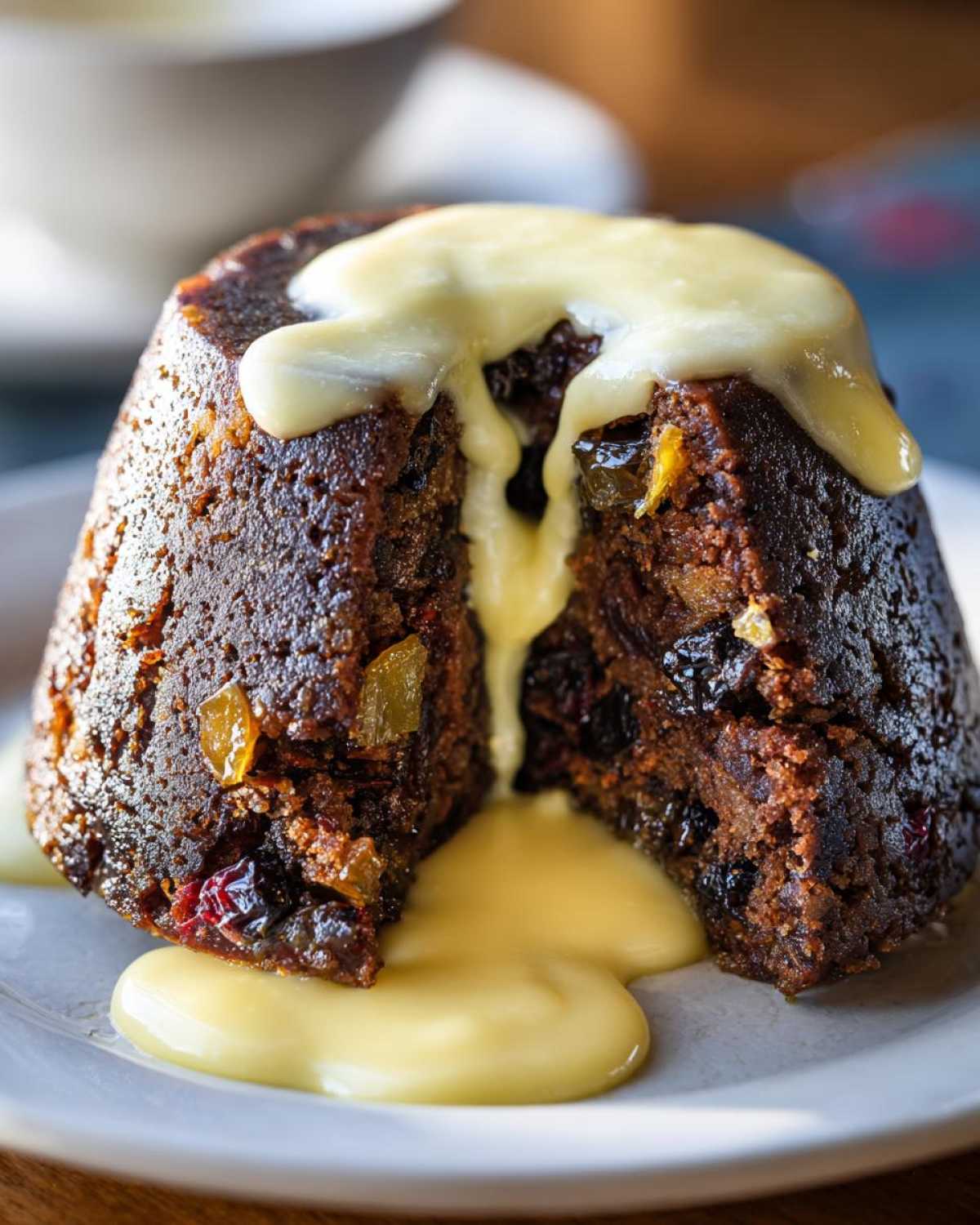
Take your 100 grams of softened butter and whip it until it’s smooth and pale. Then, you gradually add the 100 grams of icing sugar. Keep beating until it looks light and fluffy—it honestly looks a bit like cloud fluff at this stage. Then, the moment of truth: stir in those two tablespoons of brandy.
It’s wonderful served simply spooned over the warm dessert, but for that full festive show, you can warm up a tiny bit of extra brandy in a ladle, pour it over the sliced pudding, and carefully light it right at the table! It is stunning. If you want more great recipes to pair with your incredible dessert, check out my tips over at my favorite summer drinks—you’ll need something to cool down after that hot pudding!
Tips for Success with Your Festive Fruit Pudding
Listen, achieving perfection with steamed pudding isn’t just about mixing; it’s about planning ahead! This is where you really show off, because this dessert is actually *better* when you give it time to mature. You don’t have to serve it the day you make it!
My biggest piece of advice is to prepare this pudding a few weeks before you plan on serving it. Seriously! After you steam it and turn it out onto the plate (or back into the basin), pour just a little extra spoonful of brandy all over the top. Cover it loosely and keep it somewhere cool and dark—like a pantry or basement.
The pudding actually absorbs that extra booze over the next few weeks. It deepens the flavor profile and keeps the texture unbelievably moist. It’s like a little aging process for your dessert!
Now, let’s talk about suet, because I know some folks can’t find it easily or maybe they prefer not to use it. If you absolutely cannot source actual suet, don’t panic. You can substitute it with an equal weight of chilled, grated vegetable fat. It works perfectly fine, though Grandma always insisted—and I do too—that the real stuff gives you that signature lightness.
One last little tweak for texture: if you absolutely *must* lighten up the mix a bit, you can substitute the stout or dark ale with orange juice. Just be warned, you will lose some of that deep, malty background note, but it keeps the overall flavor bright and fruity. That’s really just a last resort, though; the stout wins every single time for that classic, dark color!
Storage and Reheating Instructions for Leftover Plum Pudding
What if you get interrupted before you can eat all that glorious plum pudding? Or maybe you made it weeks ago, which is honestly the best way to do it! Storing this traditional powerhouse is actually super easy, which is fantastic news for busy holiday cooks like us. Don’t fret if you have leftovers; this dessert is built to last!
If you have already steamed your plum pudding, the best way to keep it is actually right back in its basin. Make sure it’s completely cooled down first—don’t cover it while it’s still warm. Once it’s cool, wrap the whole thing tightly in plastic wrap, and then maybe a layer of foil over that, just for extra protection against any weird pantry smells. Pop it in a cool, dark cupboard. If you followed my advice earlier and gave it an extra splash of brandy before wrapping, it can happily sit there for several weeks, getting richer and more flavorful every day!
When it’s time to reheat your leftover plum pudding, you have two great options depending on how much time you have. The absolute best way, the method that keeps the texture most authentic, is to bring back the steam. Unwrap it, put it back in its basin (or a sturdy bowl if you served it already), re-cover it tightly with foil, and steam it gently for about an hour or so until it’s piping hot all the way through. You’ll want to check the water level in the pan often, just like when you originally cooked it. If you check our full privacy policy, you’ll see we value tradition, but we also value speed when needed!
If you’re short on time, the microwave works in a pinch, though I find it doesn’t heat quite as evenly. Slice off the portion you need—don’t try to reheat the whole thing at once unless you have a microwave the size of a small car! Wrap your individual slice in some damp paper towel to introduce a little moisture, and heat it in short bursts until it’s steaming hot. This works perfectly for using up the last bit of your amazing plum pudding the day after Christmas!
Frequently Asked Questions About This Classic Winter Comfort Desserts
It’s totally normal to have questions when you tackle a recipe that takes half a day to cook! Steaming fruit cake sounds less common than baking, so let’s clear up any lingering doubts before you pull out that basin. I’ve gathered the questions I get most often when folks try this recipe for the first time.
Can I make this Old Fashioned Plum Pudding without alcohol?
Yes, you absolutely can! I totally understand that maybe you don’t keep stout or brandy on hand, or perhaps you’re cooking for folks who don’t consume alcohol. For the stout in the batter, you can swap it out for some dark black tea or even some good quality, strong brewed coffee. It keeps that richness, though the flavor profile shifts a tiny bit.
For the brandy/rum additions—both in the batter and for soaking—use orange juice or even that dark grape juice. Just make sure the liquid measurement stays the same. It won’t have that signature boozy warmth, of course, but the spices and fruit still shine through beautifully. It makes a wonderful festive fruit pudding either way!
How long does the plum pudding need to steam?
This is the part where you need your commitment! For a standard 1.2-litre basin, you are looking at a minimum of five to six hours of continuous, gentle steaming. You have to be diligent, too! Keep checking that water level in your saucepan every hour or so and top it up with freshly boiled water—you don’t want the basin sitting in dry heat once that water boils away.
If you use the slow cooker method, it’s about eight hours on low, which is much easier to set and forget. But whether you choose steam or slow cooker, that long, slow cooking process is what transforms the stiff batter into that wonderfully textured, melt-in-your-mouth dessert.
What is the difference between this and a regular Christmas Pudding Recipe?
Honestly, the names get tossed around interchangeably a lot, and for good reason—they are cousins! Both are rich, steamed festive fruit puddings, packed with spices and dried fruits. The main difference in this specific English Plum Pudding recipe is the heavy nod to using black treacle (molasses) in addition to the dark brown sugar.
That treacle gives our pudding a deeper, slightly sharper, almost smoky sweetness that some standard American-style Christmas Pudding recipes skip, focusing more on hard sauce or sweetening primarily with golden syrup. Our recipe is a nod to those deep, dark, old-fashioned versions. If you are looking for that intensely rich, dark color, the treacle is your secret weapon. Feel free to reach out via our contact page if you need tips on sourcing good quality treacle!
Sharing Your Traditional Plum Pudding Experience
Well, we did it! You’ve tamed the steam gods and created an authentic, incredible dessert. Now that you’ve enjoyed that rich, spiced plum pudding, I’d love to hear about it! Head over to my blog section and drop your rating below.
Did the steaming feel tricky at first? What were your thoughts on the brandy butter sauce? Snap a picture and tag me! I live for seeing your successful holiday puddings!
PrintTraditional English Plum Pudding with Brandy Butter Sauce

Make a classic, rich, steamed English plum pudding, perfect for holiday celebrations, served with a simple brandy butter sauce.
- Prep Time: 30 min
- Cook Time: 6 hours
- Total Time: 6 hours 30 min
- Yield: 8 servings
- Category: Dessert
- Method: Steaming
- Cuisine: English
- Diet: Vegetarian
Ingredients
- 175 g suet
- 175 g dark brown sugar
- 175 g dried mixed fruit (raisins, currants, sultanas)
- 175 g fresh breadcrumbs
- 50 g plain flour
- 1 tsp ground mixed spice
- 1/2 tsp ground cinnamon
- 1/4 tsp ground nutmeg
- 1 large egg, lightly beaten
- Grated zest of 1 lemon
- 50 ml black treacle or molasses
- 50 ml stout or dark ale
- 50 ml brandy or dark rum, plus extra for soaking
- For the Brandy Butter Sauce: 100 g softened unsalted butter
- 100 g icing sugar
- 2 tbsp brandy
Instructions
- Grease a 1.2 litre pudding basin and line the base with a circle of baking parchment.
- In a large bowl, mix the suet, brown sugar, dried fruit, breadcrumbs, flour, mixed spice, cinnamon, and nutmeg.
- In a separate small bowl, mix the egg, lemon zest, treacle, stout, and 50 ml of brandy.
- Pour the wet ingredients into the dry ingredients and mix well until everything is combined into a stiff batter.
- Spoon the mixture into the prepared pudding basin, leaving about 1 cm space at the top.
- Cover the basin tightly with a double layer of foil, pleated in the center to allow for expansion. Tie securely around the rim with string. Make a string loop over the top for easy lifting.
- Steam the pudding in a large saucepan containing simmering water that comes halfway up the side of the basin. Cover the saucepan.
- Steam for 5 to 6 hours, checking the water level occasionally and topping up with boiling water as needed.
- Alternatively, cook in a slow cooker on low for 8 hours.
- To serve, carefully remove the foil and invert the pudding onto a serving plate.
- To make the sauce, beat the softened butter and icing sugar together until pale and creamy. Stir in the 2 tablespoons of brandy.
- Warm the pudding slightly before serving, then pour extra warmed brandy over the top and set alight if desired. Serve immediately with the brandy butter sauce.
Notes
- For best flavour, prepare the pudding a few weeks in advance. If doing so, pour a little extra brandy over the top before covering and storing in a cool, dark place.
- If you do not have suet, you can substitute it with an equal weight of chilled, grated vegetable fat.
- If you prefer a lighter texture, you can substitute the stout with orange juice.
Nutrition
- Serving Size: 1 slice
- Calories: 550
- Sugar: 75
- Sodium: 120
- Fat: 25
- Saturated Fat: 15
- Unsaturated Fat: 10
- Trans Fat: 0
- Carbohydrates: 80
- Fiber: 4
- Protein: 6
- Cholesterol: 70