

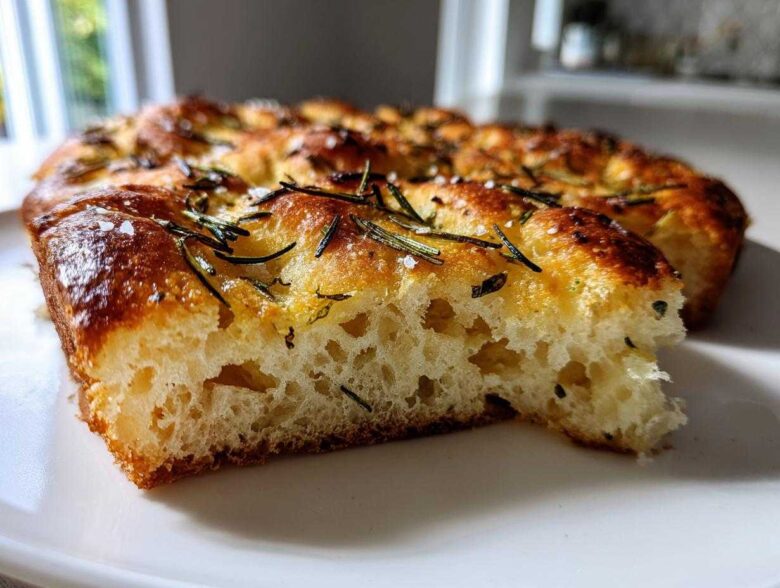
Okay, listen up, because this loaf has completely ruined me for all other bread. I used to think making truly great, rustic bread meant hours spent wrestling dough, but that’s just not true anymore! This No-Knead Skillet Focaccia with Rosemary is my secret weapon for bringing artisan quality right to my dinner table with almost zero effort. We’re talking about developing deep, incredible flavor just by letting time do the work for us, and then using a simple skillet to nail that shatteringly crisp bottom crust you normally only get from a professional oven. Honestly, ever since I figured out this method, my weeknights instantly got a massive upgrade. It’s so easy, you’ll wonder why you ever bothered kneading anything! You can check out more simple baking ideas over at our main blog hub while you wait for your dough to rise!
Why This No-Knead Skillet Focaccia with Rosemary Works So Well
Seriously, this recipe is brilliant because it completely removes the myth that great bread needs muscle or fancy technique. When we skip the kneading, we’re actually letting time do the heavy lifting! The long, slow fermentation is where all the flavor and structure develops naturally. It’s pure kitchen science, and it means you get gorgeous bread without breaking a sweat.
But the real game-changer, the thing that makes this No-Knead Skillet Focaccia with Rosemary my go-to, is the pan choice. Using that heavy cast iron skillet transforms the game entirely. We get texture that you just can’t replicate on a regular flat sheet pan!
- It’s super hands-off, letting you fit artisan bread right into your busy schedule.
- The slow overnight dough creates a complex, slightly tangy flavor.
- The skillet guarantees that signature crunch on the bottom!
The Magic of Overnight Dough for Easy Homemade Focaccia
You’ve got to trust the process here; don’t rush it! We let the dough hang out for a full 12 to 18 hours. During that time, the yeast works slowly, developing gluten structures underground, so to speak. Think of it like letting the dough mature. This extended rest is exactly why we don’t have to punch it down or fold it repeatedly. It transforms simple ingredients into something amazing, making it the ultimate stress-free treat and a wonderful Weeknight Bread Recipe.
Achieving the Best Crust with Skillet Baking Techniques
This step is non-negotiable if you want that incredible base! Instead of just plopping the oiled dough into a cold pan, we heat the skillet right on the stovetop first. Warming up the cast iron before it even touches the oven mimics the intense heat of a professional hearth. That temperature shock instantly crisps up the bottom layer of the **No-Knead Skillet Focaccia with Rosemary**. If you have a good quality cast iron skillet, it holds onto that heat perfectly, giving you that unforgettable, golden-brown base that contrasts beautifully with the soft, airy interior.
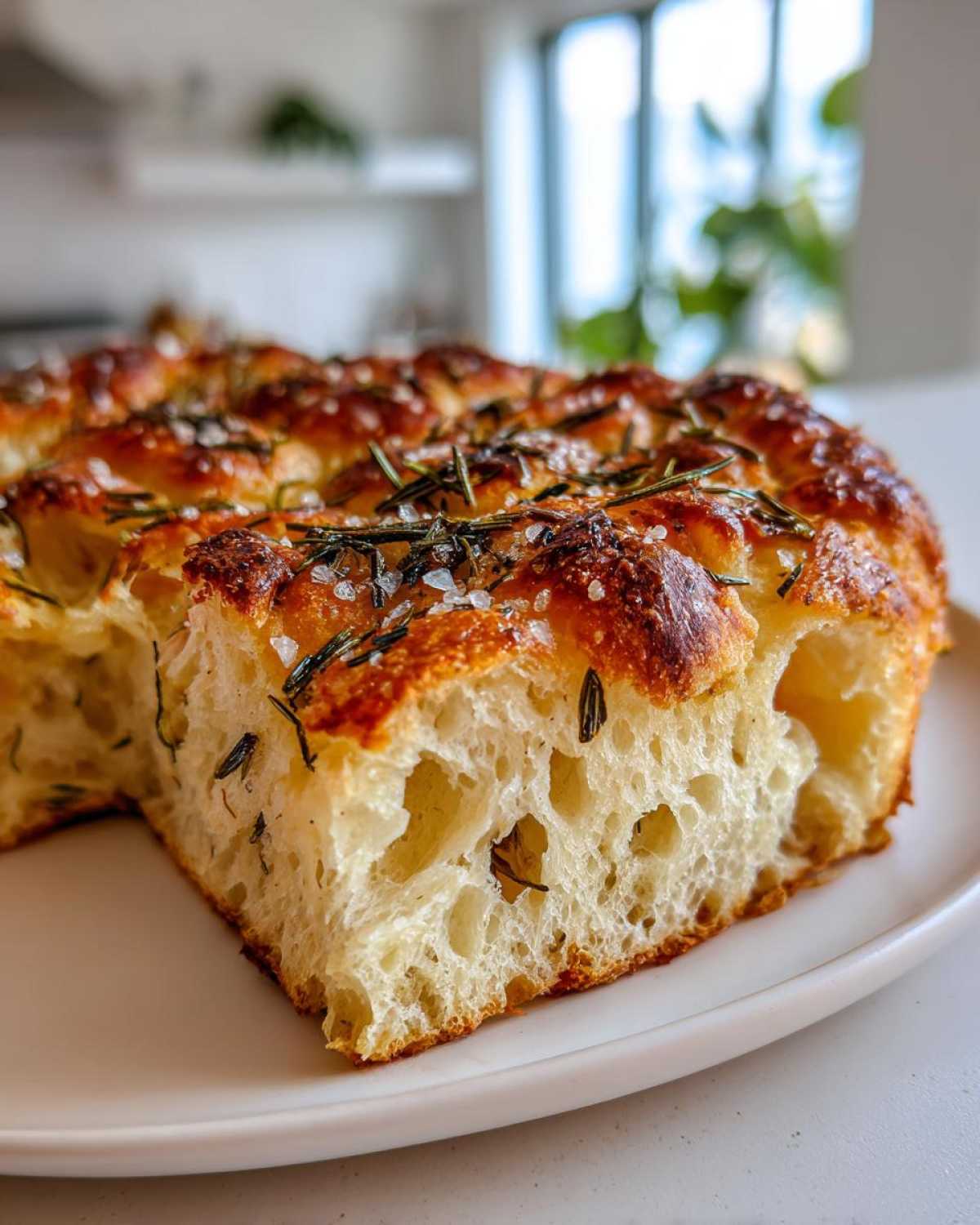
Gathering Ingredients for Your No-Knead Skillet Focaccia with Rosemary
Okay, gathering supplies for this bread is honestly the fastest part! Since we aren’t doing any fancy kneading or wild techniques, the quality of your ingredients really shines through here. This recipe keeps things super simple, focusing mostly on the bread basics plus that gorgeous herb pairing. Trust me, buying good olive oil for this makes a huge difference in the final taste!
You won’t need much beyond pantry staples to make this fantastic **No-Knead Skillet Focaccia with Rosemary** come together. Here’s the rundown of what you need to pull out before you mix up that shaggy dough:
- Three cups of all-purpose flour – nothing fancy required!
- One and a half teaspoons of instant dry yeast. Don’t use active dry unless you have time to proof it first, we want hands-off ease!
- One and a half teaspoons of salt for mixing right into the base.
- One and a half cups of warm water, and I mean warm—aim for around 105°F so you don’t shock the yeast.
- One-quarter cup of nice, fruity olive oil to mix in, plus tons more for drizzling.
- Two whole tablespoons of fresh rosemary, and you’ll want to chop that up small so it gets into every dimple.
- And finally, one teaspoon of coarse sea salt just for sprinkling on top before it bakes. That crunch is everything!
See? Barely anything! It’s so straightforward, which is why this loaf is my go-to when company shows up unexpectedly. Just make sure your rosemary is fresh; dried rosemary just doesn’t deliver the same aromatic punch for this recipe.
Step-by-Step Instructions for No-Knead Skillet Focaccia with Rosemary
This is where you see the magic happen, but honestly, you barely have to lift a finger! The instructions sound complex because we cover every tiny detail for perfection, but the actions themselves are incredibly simple. Just remember the golden rule: when mixing, stop as soon as things come together. We’re not beating cake batter here; we are coaxing dough!
Mixing the Dough and Long Rest Period
First things first, mix all your dry stuff—flour, salt, and yeast—in one big bowl. Then, pour in the warm water and that initial drizzle of olive oil. Grab a wooden spoon and just stir until you have a shaggy mass. Seriously, stop stirring when you see no dry flour pockets left. Don’t even think about kneading! Cover that bowl tightly and stash it away for 12 to 18 hours. Trust me, that long rest is the secret sauce for great texture in this bread.
Preparing the Skillet and Dimpling the No-Knead Dough
Once your dough is bubbly and doubled—it’ll look jiggly and amazing—it’s time for the skillet! You need to coat your 10-inch oven-safe skillet really well—I mean generous amounts of olive oil, like two tablespoons worth. Gently scrape that bubbly mass right into the pan. Don’t punch it down, just let it settle! Now, oil your fingers really well—this stops the sticky dough from clinging to you—and start gently pushing and dimpling the dough out toward the edges. This gentle stretching is key for spreading out your **No-Knead Skillet Focaccia with Rosemary** evenly.
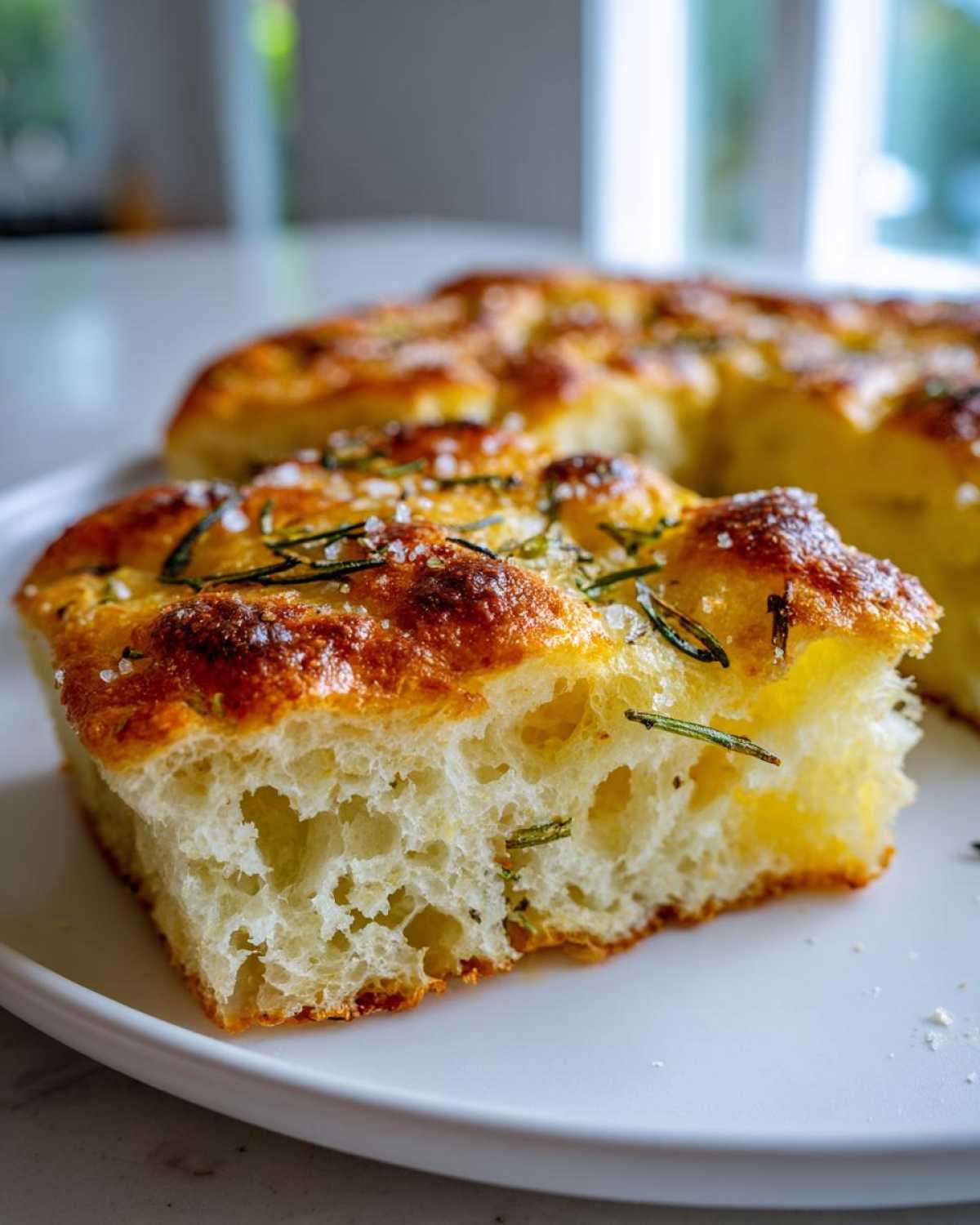
Topping and Baking for a Rustic Italian Bread Finish
Once your dough is dimpled and happy in its oily pan, it’s topping time! Sprinkle that gorgeous chopped rosemary and the coarse sea salt all over the top surface. Now, set your oven to 425°F so it gets screaming hot. Before it goes near the oven, though, put the skillet right on the stovetop over medium heat for about two or three minutes. That initial blast of stovetop heat is how we guarantee a beautifully crisp bottom crust on our Rustic Italian Bread. Then, pop it straight into the hot oven and bake for about 20 to 25 minutes until it’s golden brown on top!
Tips for Success with Your No-Knead Skillet Focaccia with Rosemary
Even though this is the easiest bread you’ll ever make, a couple of tiny observations will take your result from “great” to “I want to open a bakery!” First off, let’s talk about that olive oil. Since we use such a large quantity of it—both in the dough and pooling in the skillet—using the best quality extra virgin olive oil you can find is worth the splurge. It’s the dominant background flavor in this **No-Knead Skillet Focaccia with Rosemary**!
When you check your dough after the long rise, don’t panic if it looks completely different than other breads you’ve baked. This dough should look wet, loose, and full of bubbles—almost like a very thick batter that barely holds its shape. If it looks dry or tight, your water might have been too cold, or you covered it too tightly and trapped the air out. A jiggly, slightly slack dough is a happy dough.
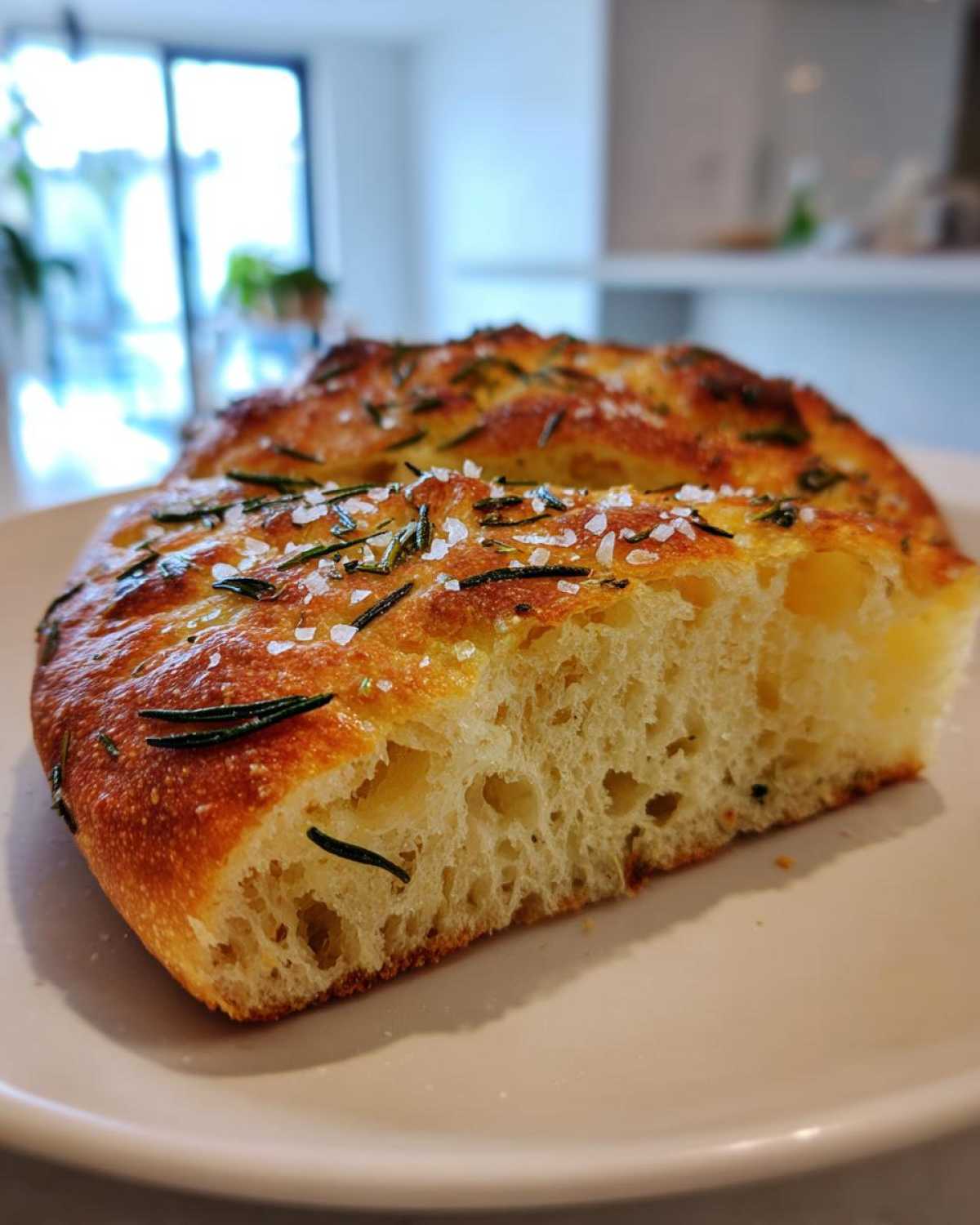
And that dimpling? This is where you build in those beautiful air holes that trap the oil and herbs. Don’t be shy, but also don’t deflate the whole thing! Use your oiled fingertips to press down firmly until they come close to touching the bottom of the pan, but stop before you completely flatten the dough. This creates those gorgeous pockets for those pools of olive oil to settle into.
When it comes out of the oven, even if it looks perfect, you need to get it out of that hot skillet immediately. Seriously, slide it right out onto a wire rack. If you leave it sitting in that residual heat even for five minutes, the bottom crust will steam itself soft, and you’ll lose that amazing crispy texture we worked so hard to achieve. After that first slice, grab some of that creamy ricotta for dipping; you won’t regret it!
Ingredient Notes and Substitutions for Rosemary Herb Bread
I always get questions about the yeast and the herbs, so let’s clear those up right now because a small change can throw off this easy recipe! We specifically call for instant dry yeast because it’s the most foolproof for **no-rise bread** like this. Instant yeast can be mixed right in with the dry ingredients without needing to prove it first, which keeps our prep time down. If you only have active dry yeast, you’ll want to proof it first in a tiny bit of your warm water with a pinch of sugar for about five or ten minutes until it gets foamy. If it doesn’t foam, toss it out and grab the instant stuff!
Now, about the star of the show: the rosemary. I can’t stress this enough—fresh is miles better here. Fresh rosemary gives you those bright, sharp bursts of pine flavor as you tear off a piece of **Rosemary Herb Bread**. Dried rosemary is much more muted, and frankly, you’ll need to use about a third of the amount because it’s concentrated.
If you absolutely must use dried rosemary for your **Easy Homemade Focaccia**, I recommend rubbing it between your palms very vigorously before sprinkling it on. This helps release some of those essential oils that dried herbs tend to hold onto tightly. We are aiming for powerful flavor here, so try to stick to the fresh if you can grab just a little bunch!
Another thing people ask about is the water temperature. Since we aren’t proofing the yeast separately, the water temperature is critical when mixing. If it’s too cold, the yeast sleeps. If it’s too hot—over 120°F—you basically kill the yeast, and your **Overnight No Knead Dough** will never rise. Aiming for that sweet spot around 105°F is your safest bet to ensure a bubbly, active dough later on.
Storing and Reheating Your No-Knead Skillet Focaccia with Rosemary
The downside of having the best crust in town is that keeping it crispy after day one can be tricky. If you’ve got leftovers of this amazing **No-Knead Skillet Focaccia with Rosemary**, you need to treat it right! The biggest enemy of that perfect skillet bottom is moisture, so storage is key. Never seal it up tightly in plastic wrap straight away; that traps steam and turns your crisp shell into a soggy sponge almost instantly.
Instead, let any leftover slices cool completely on the counter first, and then wrap them loosely in a paper towel, followed by a layer of foil or a reusable silicone bag. This lets the bread breathe a little while keeping it from drying out completely. This way, the focaccia stays nice and fresh for about two days.
When you’re ready to eat it again, we absolutely have to bring that crust back to life! Forget the microwave unless you enjoy chewy bread; the microwave just isn’t the tool for texture restoration here.
To reheat, grab a baking sheet. If you have a clean, dry skillet, that works too, but a baking sheet is usually easier. Pop the slice right on the metal—no oil needed—and stick it into an oven preheated to about 350°F. Ten minutes is usually plenty of time to warm the inside through and re-crisp that beautiful base. You want it warmed through and slightly fragrant again. I love taking a thick slab and crisping it up before slathering it with some homemade apple butter in the morning. It’s fantastic!
Serving Suggestions for This Simple Oven Bread
So, you’ve got this gorgeous, rustic loaf cooling on the rack. It’s hot, fragrant with rosemary and olive oil, and you need to decide what to serve it with! Because this is such a simple, flavorful bread, it honestly shines all by itself, but I love making a little spread or serving it alongside something hearty. Remember, we’re keeping things easy here—no five-course meals required!
The best way to eat focaccia fresh out of the oven is often the simplest. Have a small bowl of extra virgin olive oil for dipping. But don’t stop there! Mix in some freshly cracked black pepper and maybe a tiny pinch of dried oregano if you have it. It’s incredibly satisfying just dipping those cloud-like pieces into seasoned oil.
If you’re serving this as an appetizer or part of a cheese board, this bread is a dream pairing for salty, crumbly cheeses like feta or sharp aged cheddar. The rosemary really cuts through the richness of the cheese beautifully. I also love topping slices with thinly sliced prosciutto once the bread has cooled slightly.
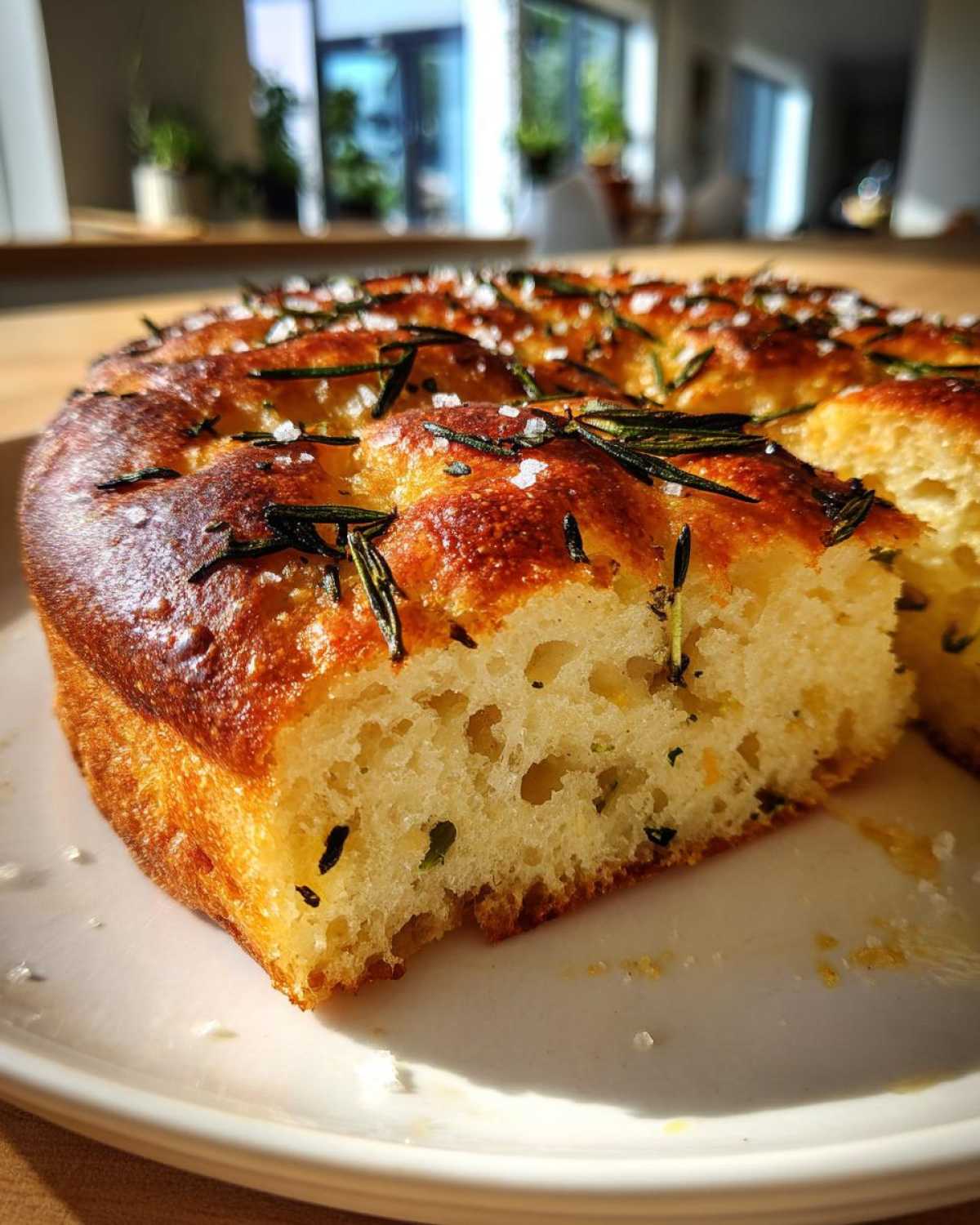
For dinner, this **Simple Oven Bread** is the perfect companion to anything soupy or stew-like. It’s sturdy enough to hold up to dipping without falling apart. My absolute favorite meal when I make this is alongside a big, steamy bowl of easy creamy zucchini soup. The herbaceous notes just sing together perfectly. Honestly, once you start making your own bread this easily, you’ll find an excuse to serve it at every single meal!
Frequently Asked Questions About No-Knead Skillet Focaccia
Can I use a glass or ceramic baking dish instead of a skillet?
You totally can, but you’re going to miss out on that signature crust! The main reason we use the skillet—especially if it’s cast iron—is that heavy metal heats up so intensely on the stovetop first. That means when the dough hits the pan, you instantly jump-start the browning process underneath, giving you that fantastic, crispy base. If you use a glass pan, you’ll need to skip the pre-stovetop heating and rely solely on the oven. Your bread will still be delicious, but it will have a much softer bottom, more like a standard sheet-pan focaccia rather than the true **Cast Iron Focaccia** we are aiming for here.
My dough didn’t rise much overnight. What did I do wrong?
Don’t worry, this happens to everyone sometimes! Usually, it comes down to water temperature or yeast condition. If your water was too cold, the yeast just took a really long nap. If the water was too hot, you might have accidentally killed the little guys off! For this recipe, we want visible bubbles—huge ones—after 12 hours. If it’s looking flat, the most likely culprit is that the bowl wasn’t covered tightly enough. This dough needs to feel cozy and sealed up so the CO2 can’t escape. If it’s still flat after 18 hours, just start over! The good news is that this is such a simple recipe, you can be back mixing in five minutes.
How do I adjust this recipe if I want a truly soft crumb bread instead of a crispy bottom?
That is an easy fix, and it goes back to how we handle the heat! If you want a fluffy, **Soft Crumb Bread** texture throughout and don’t need that hard, crispy base, just skip the stovetop preheating step altogether. Mix your dough, let it rest, oil your pan (or use parchment paper on a regular baking sheet instead of a skillet), and just bake it at 425°F until done. The dough will still be lovely and airy because of the no-knead process, but the bottom will be softer because it didn’t get that initial blast of intense heat from the metal. You can even try a cooler temperature, like 400°F, for a slower bake!
Can I swap the rosemary for other herbs, like oregano or dried thyme?
Of course you can! While rosemary is just divine with the olive oil and sea salt, this bread is forgiving enough for other herb combinations. If you use dried herbs, remember to rub them between your palms first to wake up the flavor. Oregano gives you a really nice, bold flavor perfect for dipping in white chicken lasagna soup later! If you’re using dried herbs, I usually drop the amount down by about a third compared to the fresh rosemary measurement, just because dried herbs pack such a punch in a long bake. Fresh thyme is another fantastic option if you have it on hand!
Nutritional Estimates for Your Homemade Focaccia
Alright, let’s talk numbers! I always feel a little guilty pulling a fresh loaf of this **No-Knead Skillet Focaccia with Rosemary** out of the oven, because it tastes so incredibly rich, but the actual break-down often surprises people—especially because we aren’t using tons of added sugar!
Now, you have to take this with a grain of salt, right? I’m using my favorite brand of olive oil and my kitchen scale isn’t always perfectly calibrated, so these are solid estimates based on the amounts listed in the recipe. Exact branding and how much oil actually soaks into the pan versus the bread itself will change things slightly!
Here is a rough look at what you’re getting per slice (assuming this recipe yields 8 generous slices):
- Serving Size: 1 slice
- Calories: Around 250 (That’s a steal for real bread!)
- Fat: About 10 grams (Remember, most of that is heart-healthy olive oil!)
- Carbohydrates: Roughly 35 grams
- Protein: About 6 grams
- Sodium: Approximately 350 milligrams
I always point out that the fat content is mostly unsaturated fat because we are sticking to olive oil, which is fantastic. You’ll notice the sugar is really low—only about 1 gram—because we rely on the natural sweetness of the wheat and the olive oil flavor rather than sweetening it up like a cake. Enjoy this **Simple Oven Bread** knowing it’s packed with way more flavor and way less junk than anything store-bought!
PrintEasiest No-Knead Skillet Focaccia with Crispy Rosemary Crust
Make flavorful, rustic focaccia bread without kneading. This simple recipe uses a skillet for a wonderfully crisp bottom crust.
- Prep Time: 10 min
- Cook Time: 25 min
- Total Time: 12 hours 45 min
- Yield: 8 servings
- Category: Bread
- Method: Baking
- Cuisine: Italian
- Diet: Vegetarian
Ingredients
- 3 cups all-purpose flour
- 1 1/2 teaspoons instant dry yeast
- 1 1/2 teaspoons salt
- 1 1/2 cups warm water (about 105°F)
- 1/4 cup olive oil, plus extra for drizzling
- 2 tablespoons fresh rosemary, chopped
- 1 teaspoon coarse sea salt, for topping
Instructions
- In a large bowl, whisk together the flour, yeast, and salt.
- Pour in the warm water and 1/4 cup of olive oil. Mix with a wooden spoon until just combined and a shaggy dough forms. Do not overmix or knead.
- Cover the bowl tightly with plastic wrap and let the dough rest at room temperature for 12 to 18 hours, or until doubled in size and very bubbly.
- Generously coat a 10-inch oven-safe skillet (cast iron works best) with about 2 tablespoons of olive oil.
- Gently scrape the dough into the oiled skillet. Drizzle the top of the dough with a little more olive oil.
- Use your oiled fingers to gently dimple the dough all over, stretching it slightly to fill the pan.
- Sprinkle the chopped rosemary and coarse sea salt evenly over the top.
- Preheat your oven to 425°F (220°C).
- Place the skillet on the stovetop over medium heat for 2 to 3 minutes to warm the bottom before baking.
- Transfer the skillet to the preheated oven and bake for 20 to 25 minutes, or until the top is golden brown and the internal temperature reaches 200°F (93°C).
- Carefully remove the focaccia from the skillet immediately and let it cool on a wire rack before slicing.
Notes
- For a softer crumb, let the dough rise in the refrigerator for up to 3 days instead of at room temperature.
- If you do not have an oven-safe skillet, you can bake the dough on a parchment-lined baking sheet, but the bottom crust will be less crisp.
- Use good quality olive oil for the best flavor in the dough and topping.
Nutrition
- Serving Size: 1 slice
- Calories: 250
- Sugar: 1
- Sodium: 350
- Fat: 10
- Saturated Fat: 1.5
- Unsaturated Fat: 8.5
- Trans Fat: 0
- Carbohydrates: 35
- Fiber: 2
- Protein: 6
- Cholesterol: 0