

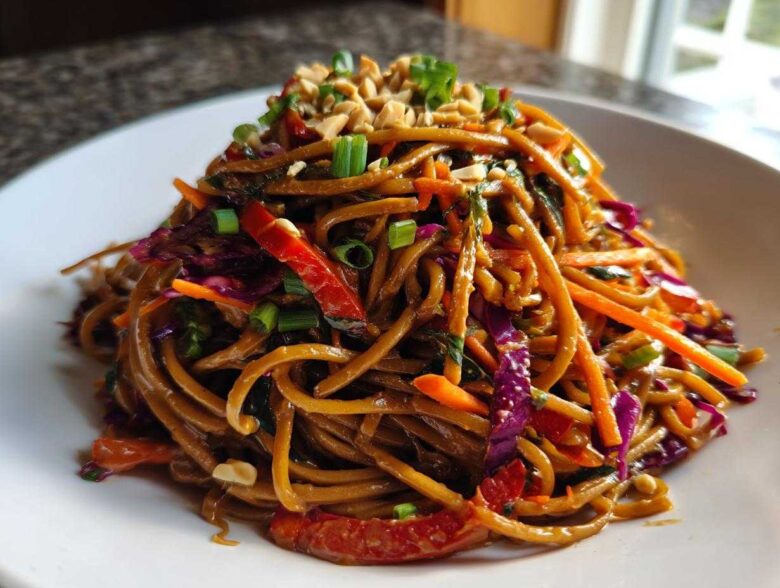
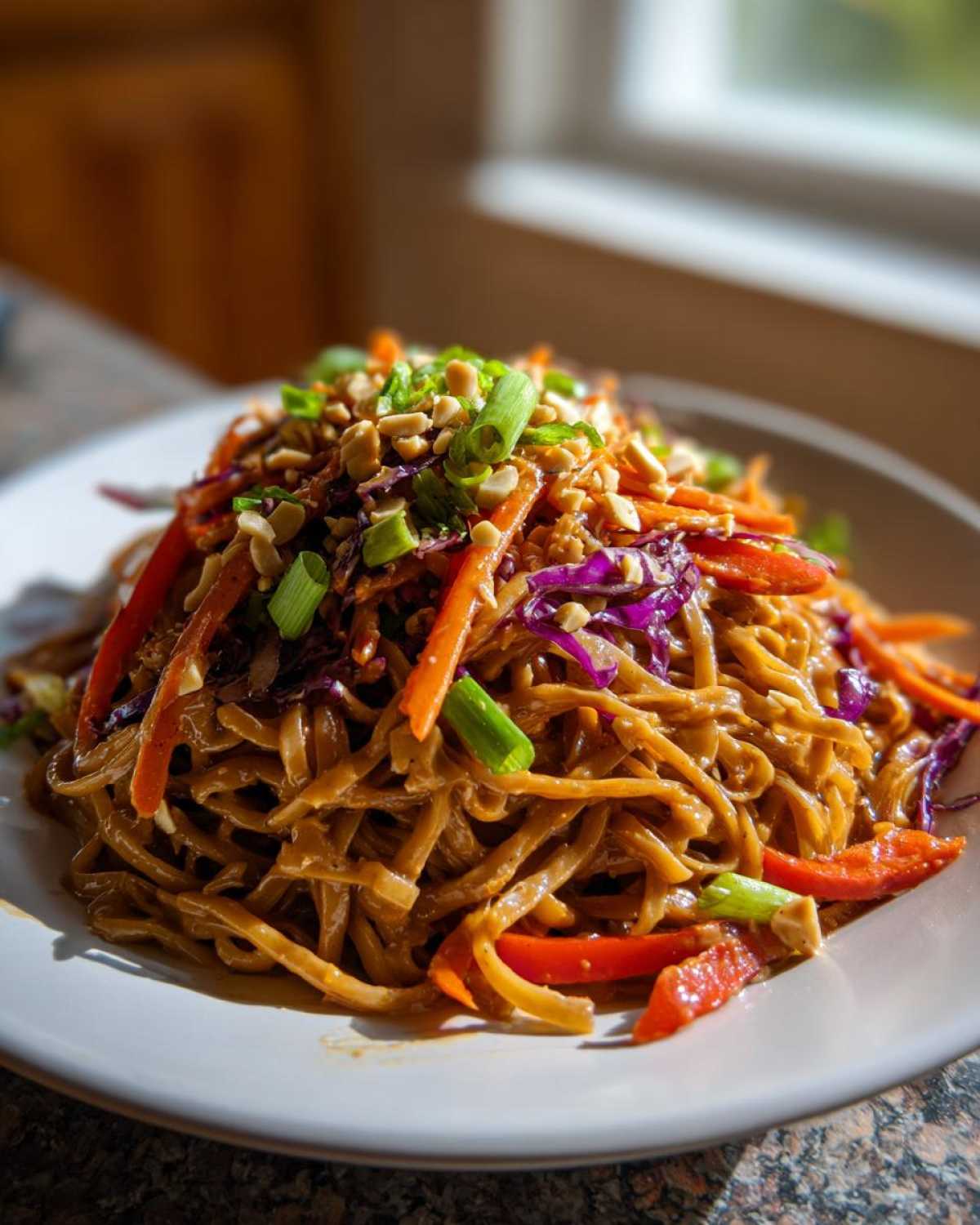
Oh, friends, how many times have you made a pasta dish that was just… soft? You know what I mean—delicious flavor, but totally lacking that satisfying snap or crunch? I swear, the difference between a good noodle dish and an absolutely addictive one is texture. That’s why I’m bursting to share my favorite weeknight savior: Thai Peanut Noodles with Crunchy Veggies packed into one big, beautiful bowl. This isn’t just some gloppy, heavy sauce clinging to mushy noodles, no sir! This recipe focuses on creating that perfect contrast.
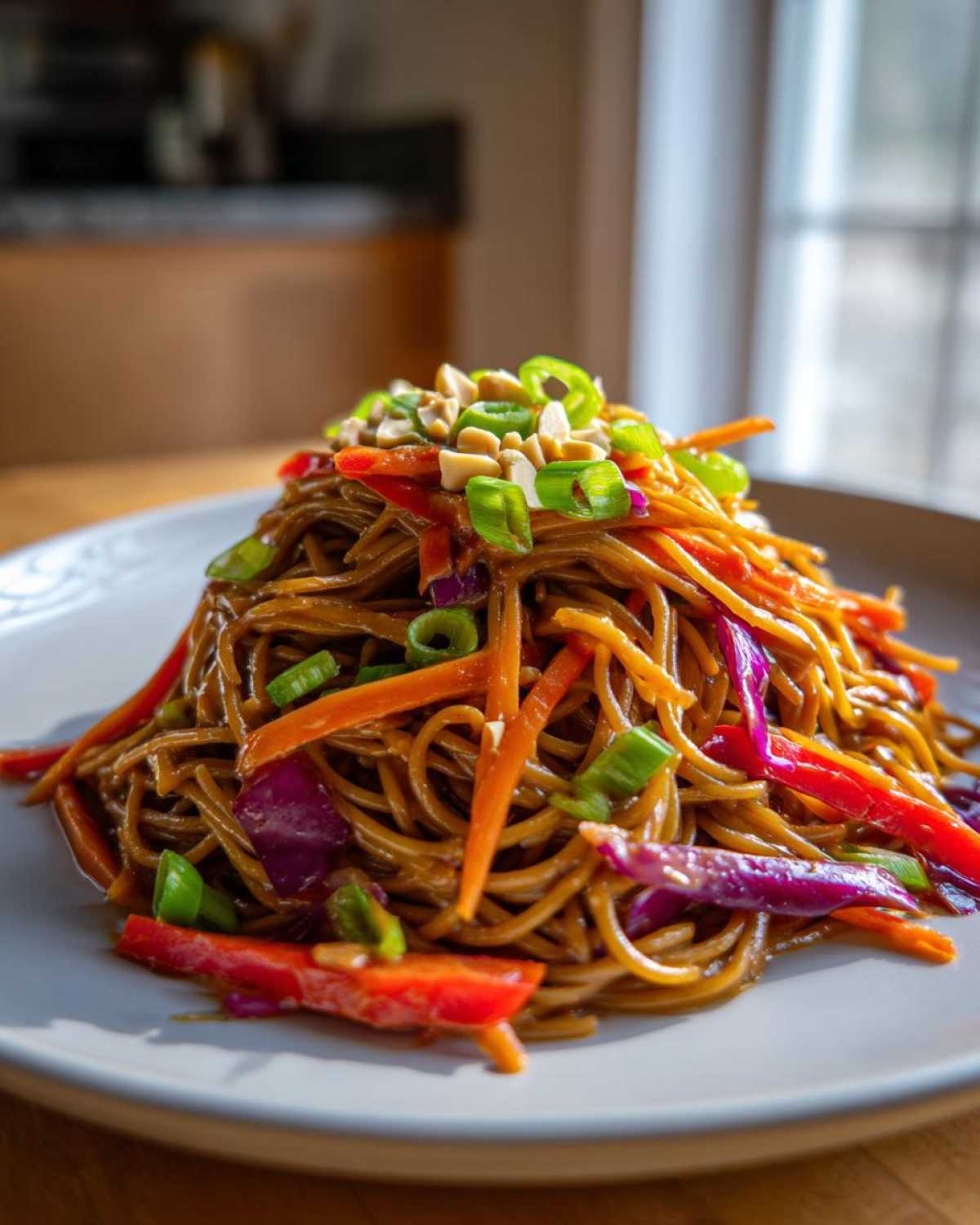
When I first started experimenting with Asian flavors way back when, I struggled terribly with finding the right balance between peanut, acid, and spice—it always ended up too sweet, or worse, tasting like straight peanut butter. But after tweaking ratios for ages, I finally hit on this savory-sweet dressing that clings perfectly to everything. And best of all? With only about 15 minutes of prep, you’ve got a complete, flavorful dinner ready in under 30 minutes. Trust me, once you add the raw veggies, these noodles will become your new go-to quick Asian noodle dinner!
Why You Will Love This Thai Peanut Noodles with Crunchy Veggies Recipe
Honestly, this recipe checks every single box I have when I’m tired but craving something amazing. You get that fantastic flavor explosion without spending half your evening over the stovetop. It’s my secret weapon for busy nights!
- It’s lightning fast—seriously, we are talking about a genuine 30 Minute Noodle Dinner start to finish.
- The sauce is perfectly balanced; that Savory Sweet Peanut Dressing is addictive.
- It delivers on the promise of texture, turning into a glorious Crunchy Vegetable Noodle Salad every time.
- It’s super flexible, and switching to a Gluten Free Peanut Noodle Option takes literally zero extra effort.
What’s not to love about a customizable, quick, and crunchy masterpiece?
Essential Ingredients for Thai Peanut Noodles with Crunchy Veggies
Okay, listing ingredients is usually the boring part, but stick with me here because this is where the magic starts! Getting the right ratio in the sauce is everything for that true Thai flavor profile. We need a nice balance of salty, sweet, tangy, and nutty. Don’t worry if you’re vegetarian or need to avoid gluten; I’ve got notes right here on how to swap things out to keep this your favorite Vegetarian Thai Noodles with Crunch.
Remember, the vegetables go in raw—totally raw! That’s the key to making this the most texturally interesting dish on your table. Here’s what you need for four happy servings:
For the Savory Sweet Peanut Dressing
- 1/2 cup creamy peanut butter (I use a natural kind, but whatever you grab works!)
- 1/4 cup soy sauce (If you’re going gluten-free, swap this for Tamari, no hesitation!)
- 3 tablespoons rice vinegar
- 2 tablespoons maple syrup or honey (Use maple syrup if you want to keep it strictly vegan!)
- 1 tablespoon toasted sesame oil
- 1 tablespoon fresh lime juice
- 1 teaspoon grated fresh ginger (Don’t even think about using the powdered stuff here, please!)
- 1 clove garlic, minced super fine
- 1/4 cup hot water (This is crucial! You add this slowly to get that perfect, pourable consistency.)
Noodles and Crunchy Vegetable Components
This is where you get to have fun and focus on the crunch! We are using spaghetti or linguine today, but rice noodles work beautifully too. The vegetables are intentionally kept raw so they stay crisp.
- 12 oz dried noodles (spaghetti, linguine, or rice noodles)
- 1 large carrot, julienned (long, matchstick cuts are best!)
- 1 red bell pepper, thinly sliced
- 1 cup shredded red cabbage
- 1/2 cup snow peas, trimmed
- 1/4 cup chopped scallions, for garnish
- 2 tablespoons chopped peanuts, for garnish
Step-by-Step Instructions for Thai Peanut Noodles with Crunchy Veggies
This is where things move fast, which is why I love this recipe for a Quick Asian Noodle Dinner! Seriously, you can have this done in 25 minutes total—that’s 15 minutes of quick prep and only about 10 minutes of hands-off cook time for the noodles. The method focuses on minimal cooking so those veggies really shine.
Cooking the Noodles and Cooling
First things first, get those noodles boiling! Cook them exactly how the package tells you to, whether it’s standard spaghetti or tricky rice noodles. Now, here’s the absolute must-do step for this as a Cold Peanut Noodle Salad: drain them immediately and then hit them with a blast of cold water. Seriously, rinse them until they aren’t hot anymore! This stops the cooking process right away and washes off that starchy surface residue. If you skip this, your noodles will turn into sticky, sad clumps later. Set those cool noodles aside while you whip up the sauce.
How to Make Thai Peanut Sauce
Time for the star of the show—the Best Peanut Sauce Recipe! Grab a medium bowl and just dump in all your wet and flavoring ingredients: the peanut butter, soy sauce/tamari, vinegar, sweetener, sesame oil, lime, ginger, and garlic. Now whisk like crazy! It’s going to look really thick and stubborn at first, like it might never come together. That’s where the hot water comes in. Add it just one tablespoon at a time, whisking hard after each addition. Keep going until it smooths out into something lovely and pourable. Taste it! If you need more tang, splash in a tiny bit more lime. If it needs thinning, add just a touch more water. It should coat a spoon nicely.
Combining and Tossing Your Thai Peanut Noodles with Crunchy Veggies
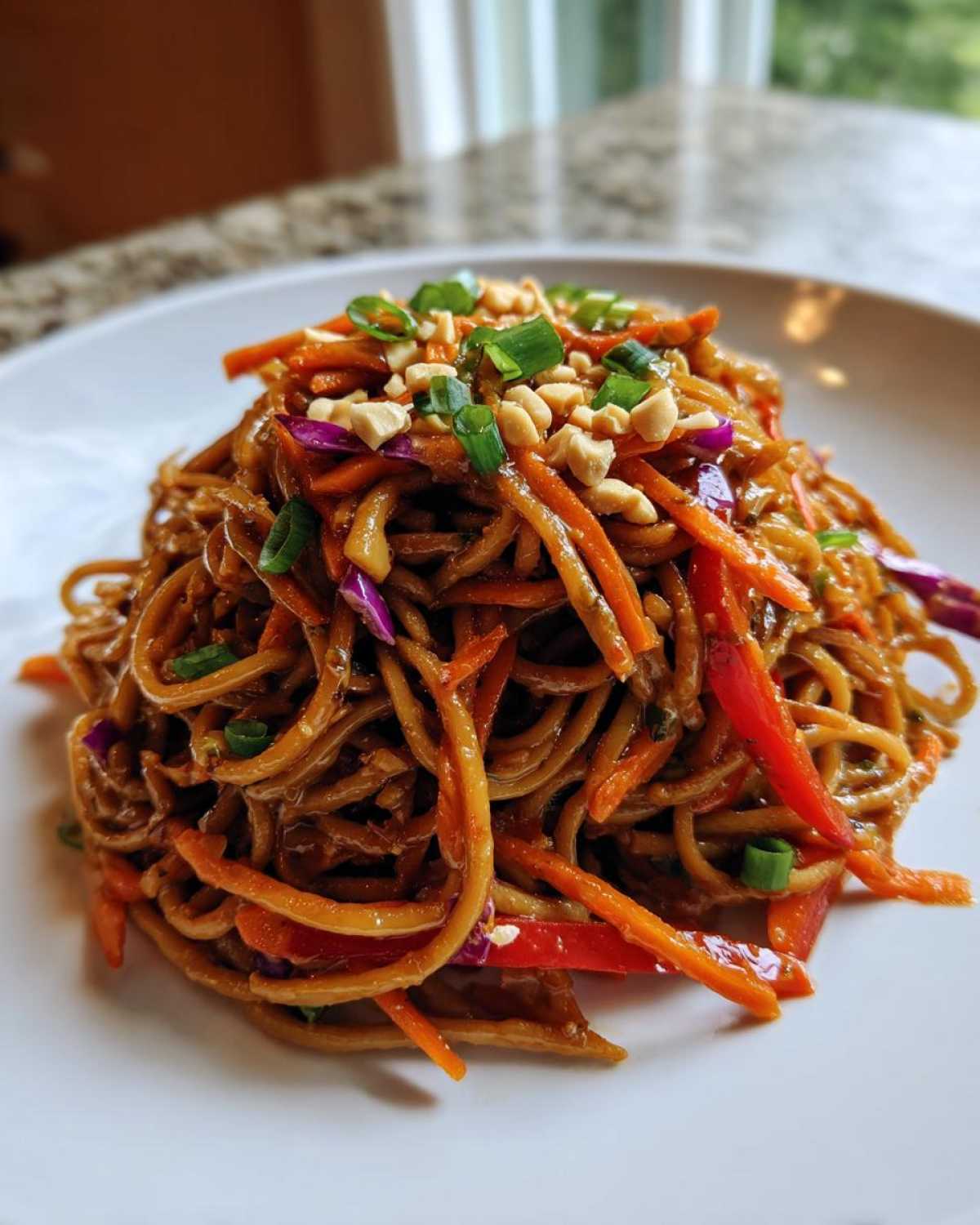
We are in the home stretch now! Grab your biggest mixing bowl—you need space here. Add the cool, drained noodles right in there with all your ready-to-go raw vegetables: the carrots, bell peppers, cabbage, and snow peas. Pour that gorgeous peanut sauce right over the top. Now, use tongs or clean hands (I prefer tongs myself!) and toss everything gently but thoroughly. Keep tossing until every single piece of noodle and slice of vegetable is coated wonderfully in that savory dressing. You can eat it right up—it’s best when fresh—or chill it down to set the flavors!
Tips for Perfect Thai Peanut Noodles with Crunchy Veggies Texture
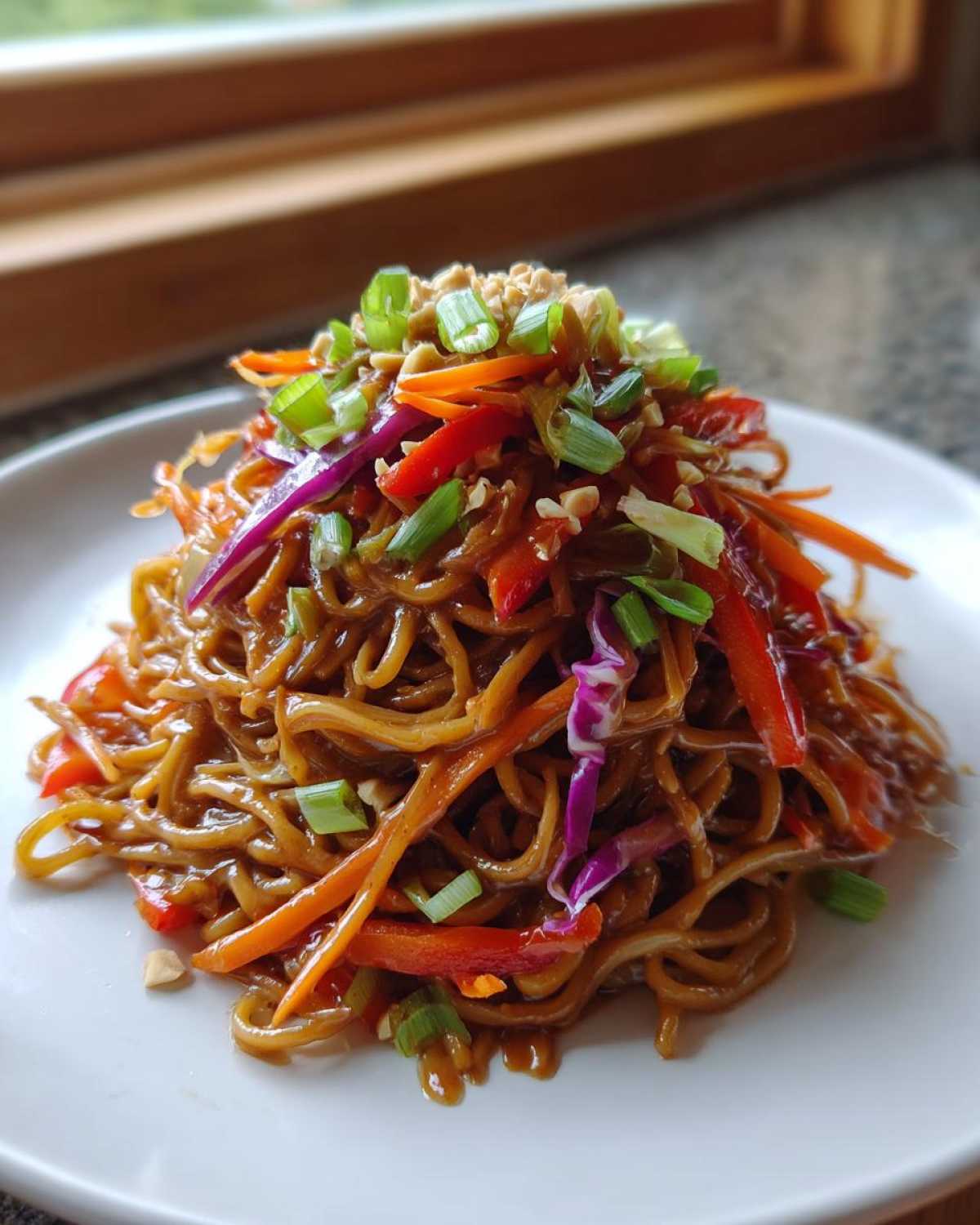
You know I’m obsessed with the crunch, right? It’s not just about throwing raw vegetables in; we need to prep them correctly to give us the best snap possible. For things like carrots and peppers, forget giant chunks. Aim for thin slices or julienne cuts—this maximizes surface area for the sauce without creating tough, hard-to-chew pieces.
If you’re planning on making this ahead as a Healthy Peanut Noodles Meal Prep option, listen closely: the secret is keeping the sauce slightly thicker during the initial mix. When you go to serve it the next day, you’ll likely need to thin it out with a splash of water or lime juice because the veggies will have released some moisture, which the sauce absorbs. Also, store any very delicate greens like lettuce separately if you’re packing lunches!
And please, please, please make sure those noodles are ice cold before you toss them. Cold noodles don’t absorb sauce as readily as lukewarm noodles, which keeps the sauce coating them perfectly instead of soaking in and making everything heavy.
Protein Additions and Serving Suggestions for Your Quick Asian Noodle Dinner
Now that we’ve mastered the sauce and the crunch factor—because texture is life, right?—we need to talk about turning this into a complete meal. While these peanut noodles are fantastic as a standalone vegetarian dish, sometimes you need something more hearty to stick with you for the evening. This is where we turn it into that perfect Weeknight Thai Inspired Meal!
If you’re looking to add protein, I have two absolute favorites that blend seamlessly. Cooked, cubed tofu is my go-to for keeping it vegetarian. Just press that tofu well, toss it in a little cornstarch, and fry it until it’s golden brown and crispy before you mix it in. Honestly, crispy tofu is almost as good as the crunchy vegetables! If you prefer meat, some leftover shredded rotisserie chicken works wonders here too.
Beyond the toppings we already mentioned—the standard scallions and peanuts—try bumping up the freshness level at serving time. A final squeeze of fresh lime juice over the top really wakes up all those flavors. And if you have a bunch of fresh cilantro lying around? Chop it up and sprinkle it on. It just screams “fresh Thai!” Serve it straight out of the big bowl, or if you’re fancying it up for guests, you can even serve the noodles over a bed of crisp romaine lettuce for an extra layer of coolness.
Storage and Making Ahead for Healthy Peanut Noodles Meal Prep
Good news! This recipe is absolutely fantastic for making ahead. Honestly, it might even taste better the next day, which is why this solidifies its spot as a go-to for Healthy Peanut Noodles Meal Prep. Since we’re serving this dish cold mostly, it’s perfect for packing up for lunch or a grab-and-go dinner.
If you’re planning on eating it within a day or two, you can absolutely mix the entire thing together—noodles, sauce, and all the crunchy veggies—and store it in an airtight container in the fridge. It turns into that wonderful, flavorful Cold Peanut Noodle Salad experience we love.
However, if you’re a serious meal prepper and you are making this for four or five days out, I have a small tip for you to preserve maximum crunch. If you mix everything now, those beautiful carrots and cabbage will start to release water into the sauce, and your veggies might shrink up a little bit. If you want to keep everything impossibly crisp, try this: keep your sauce separate from the noodles and veggies.
Store the tossed noodles and raw veggies in one container, and the peanut sauce in a small, sealed jar. When you’re ready to eat, just take out your portion of noodles, pour the desired amount of sauce over it, and give it a quick toss right in the container. You might need to add a teaspoon of water or a tiny splash of lime to loosen the cold sauce back up, but I promise, your vegetables will thank you for the separate bath!
Dietary Adaptations for Your Thai Peanut Noodles with Crunchy Veggies
I love that this recipe is naturally almost there for anyone, but making an easy switch is always satisfying, right? It makes sure everyone at the table, no matter their dietary needs, gets to enjoy this incredibly fresh noodle salad. Keeping things flexible is key to being a good host—or just feeding myself when I get in a mood for pasta!
If you’re worried about gluten, switching this to a Gluten Free Peanut Noodle Option is a breeze. Just swap out the standard soy sauce for Tamari—it has the same salty depth but without the wheat. You’ll also want to make sure whatever dried noodle you choose (if you aren’t using rice noodles) is explicitly certified gluten-free. Zero fuss!
For my vegetarian and vegan friends, this is already covered, but look out for the sweetener. If you used honey last time, switch it out for maple syrup to keep things completely plant-based for that wonderful Vegan Peanut Noodle experience. And if you’re trying to cut back on carbs? Ditch the wheat or rice noodles entirely and use spiralized zucchini or shirataki noodles instead. The texture of the raw veggies will carry the dish beautifully!
Frequently Asked Questions About Thai Peanut Noodles
I’ve pulled together some of the most common questions I get asked once people start whipping up batches of these noodles. It’s always fun chatting about how to tweak things! If you’ve got a question that isn’t covered here, feel free to send a note over on my contact page—I love hearing from you!
Can I use almond butter instead of peanut butter?
Oh, absolutely! Peanut butter is the classic choice because it has a really specific, mellow flavor that holds up well to the vinegar and ginger, but almond butter is a fantastic substitute. It usually results in a slightly richer, nuttier sauce profile. Just be aware: almond butter tends to be thicker right out of the jar than peanut butter, so you might need an extra tablespoon or two of that hot water to get the sauce thinned out to the perfect drizzling consistency.
How long can I store these noodles?
As I mentioned when we talked about meal prepping, these noodles are great for making ahead, especially if you want them as a true Cold Peanut Noodle Salad. If you mix the sauce into everything right away, they are best eaten within 2 days. Why? Because those crunchy veggies are going to release moisture into the sauce as they sit! If you want them to last 4 or 5 days, separate the sauce like I suggested earlier. They will last a week easily if stored that way, but they definitely lose some snap.
Can I use noodles that I have stir-fried instead of boiled?
That’s a great question if you’ve already got leftovers, or if you prefer a fully cooked noodle! Yes, you can definitely assemble this using noodles that were part of a previous Stir Fry Noodles with Crisp Vegetables. Just make sure that when you use already cooked noodles, you don’t over-sauce them, and definitely make sure they are completely cooled down before you toss them with the raw vegetables and peanut sauce. If they are warm, they will wilt the raw carrots and cabbage instantly, and you’ll lose that essential crunch contrast.
What other vegetables work best in these noodles?
Honestly, anything that stays firm works! I used carrots, peppers, and cabbage this time because they are easy to find and hold up well. But you can’t go wrong adding thinly sliced cucumber (seeds removed!), shredded purple kale, or even water chestnuts if you find them. The key is keeping them raw and cutting them thin so they integrate well into the noodle mix rather than sitting on top like a slaw.
Estimated Nutritional Information for Thai Peanut Noodles
I’m not a certified nutritionist, so please take these numbers with a grain of salt—or maybe a sprinkle of brown sugar, depending on your preference! But for anyone tracking things like calories or macros, I jotted down the general estimates based on the ingredient list above for a standard serving size, which is about one quarter of the recipe.
These figures can definitely shift around depending on what kind of peanut butter you grab, or if you swap out honey for maple syrup, so just treat this as a good guideline for planning your Quick Asian Noodle Dinner!
- Serving Size: 1 serving (about 1/4 of recipe)
- Calories: 550
- Protein: 18g
- Fat: 28g
- Saturated Fat: 4g
- Carbohydrates: 60g
- Fiber: 6g
- Sugar: 14g
- Sodium: 750mg (This is why using low-sodium soy sauce can make a big difference!)
Just keep in mind that if you decide to bulk this up with a hefty amount of chicken or tofu, or if you load up on the coconut milk in other recipes, these numbers will change quickly! But for the basic ratio of noodles, veggies, and sauce we made here, this is a great benchmark for a satisfying, balanced meal.
PrintThai Peanut Noodles with Crunchy Vegetables
A simple recipe for flavorful Thai peanut noodles packed with crisp, fresh vegetables for texture.
- Prep Time: 15 min
- Cook Time: 10 min
- Total Time: 25 min
- Yield: 4 servings
- Category: Dinner
- Method: Tossing
- Cuisine: Thai
- Diet: Vegetarian
Ingredients
- 12 oz dried noodles (spaghetti, linguine, or rice noodles)
- 1/2 cup creamy peanut butter
- 1/4 cup soy sauce (use tamari for gluten-free)
- 3 tablespoons rice vinegar
- 2 tablespoons maple syrup or honey
- 1 tablespoon toasted sesame oil
- 1 tablespoon fresh lime juice
- 1 teaspoon grated fresh ginger
- 1 clove garlic, minced
- 1/4 cup hot water (or more, to thin)
- 1 large carrot, julienned
- 1 red bell pepper, thinly sliced
- 1 cup shredded red cabbage
- 1/2 cup snow peas, trimmed
- 1/4 cup chopped scallions, for garnish
- 2 tablespoons chopped peanuts, for garnish
Instructions
- Cook the noodles according to package directions. Drain them and rinse immediately with cold water to stop cooking and remove starch. Set aside.
- Prepare the peanut sauce: In a medium bowl, whisk together the peanut butter, soy sauce, rice vinegar, maple syrup, sesame oil, lime juice, ginger, and garlic.
- Add the hot water one tablespoon at a time, whisking until the sauce reaches a smooth, pourable consistency. Taste and adjust seasoning if needed.
- In a large bowl, combine the cooled noodles, julienned carrot, sliced red bell pepper, red cabbage, and snow peas.
- Pour the peanut sauce over the noodles and vegetables. Toss everything together until the noodles and vegetables are evenly coated.
- Serve immediately or chill for later. Garnish each serving with chopped scallions and peanuts.
Notes
- For a vegan option, use maple syrup instead of honey.
- To keep vegetables crunchy, do not cook them; add them raw to the cooled noodles.
- Add cooked, cubed tofu or shredded chicken for extra protein.
- If using rice noodles, follow package directions for soaking or boiling.
Nutrition
- Serving Size: 1 serving
- Calories: 550
- Sugar: 14
- Sodium: 750
- Fat: 28
- Saturated Fat: 4
- Unsaturated Fat: 24
- Trans Fat: 0
- Carbohydrates: 60
- Fiber: 6
- Protein: 18
- Cholesterol: 0